
3 FPL Gameweek 1 Drafts Compared: Arsenal Edge
Arsenal is my No. 1 FPL Gameweek 1 pick for 2026/27 because its opening fixture offers the strongest combination of goal potential and clean-sheet security. Manchester City ranks second for attacking upside, while Manchester United is third for managers targeting early fixtures against promoted opposition. The Gameweek 1 deadline is 18:30 UK time on Friday, 21 August 2026, and the new season begins with Arsenal facing Coventry. I tested three draft philosophies: a balanced template, an aggressive premium-heavy build, and a flexible value squad. The balanced draft performed best on projected minutes, captaincy reliability, bench coverage, and transfer flexibility. Arsenal leads the early defensive projections, City remains a serious home captaincy option against Bournemouth, and United’s schedule is attractive but less certain because of rotation and new-season role changes. Start with one dependable captain, avoid unconfirmed injury doubts, and preserve at least £0.5m in flexibility where possible.

Photo by Franco Monsalvo on Pexels
The common misconception is that Gameweek 1 should be treated like a final exam. It is not. It is the first piece of evidence in a 38-week season, and pretending otherwise is how perfectly reasonable managers burn a Wildcard before September while congratulating themselves for being “decisive.” Data matters, but so do minutes, tactical roles, set pieces, fixture swings, and the brutal fact that pre-season predictions are often wrong.
For 2026/27, Match Daily approaches FPL Gameweek 1 through a risk-managed lens: identify the best opening fixtures, separate secure starters from attractive names, and avoid paying a premium for players whose roles remain unclear. The official Fantasy Premier League game rules confirm the importance of playing minutes, captaincy, formation requirements, and transfer penalties, while Premier League fixture information should remain your final source for scheduling changes. Before locking your team, cross-check official team news rather than trusting a screenshot from a stranger who has somehow “heard something” in a supermarket.
Want a clearer starting point before choosing your squad?
The Top 3 FPL Gameweek 1 Strategies at a Glance
- Balanced Arsenal-led draft — best overall: Combines Arsenal defensive coverage, one dependable premium captain, and enough budget for early corrections.
- Manchester City premium draft — best for attacking upside: Prioritises City’s home fixture against Bournemouth but carries greater rotation risk.
- Manchester United value draft — best value: Uses United’s opening fixtures against promoted teams while keeping money available for emerging assets.
These are not three “perfect teams.” There is no perfect team, despite what the person in your mini-league who finishes 1.2 millionth every year keeps claiming. They are three coherent structures built around different risk tolerances. The first protects against blank returns through defensive security and captaincy stability; the second aims for a large opening haul; the third relies on fixture value and fast information gathering after the first two deadlines.
The key distinction is between fixture quality and player quality. Arsenal may have the best Gameweek 1 defensive environment, but that does not automatically make every Arsenal defender a better pick than every midfielder elsewhere. Likewise, Manchester City can project strongly for goals while still presenting rotation concerns under a new manager. According to Opta Analyst, predictive football models generally combine historical performance, opponent strength, home advantage, and expected goals rather than relying on league position alone. That distinction is crucial because your FPL points arrive from individual actions, not from a club’s reputation.
Practical Gameweek 1 checklist
- Confirm the deadline: 18:30 UK time, Friday, 21 August 2026.
- Check official injury news for Benjamin Sesko, Nordi Mukiele, Omar Alderete, and Jeremy Doku.
- Avoid ruled-out players including Eli Junior Kroupi, Yankuba Minteh, William Saliba, and Jurrien Timber.
- Select a captain with secure starts and multiple routes to points.
- Keep one playing substitute, not three decorative bench ornaments.
- Review set-piece duties and penalty responsibilities before the deadline.
- Do not spend every last £0.1m unless the upgrade clearly improves expected minutes.
#1 Arsenal-Led Draft: Best Overall
Arsenal is the best overall Gameweek 1 foundation because its match against Coventry combines home advantage, defensive strength, and a favourable projected goal environment. The strongest Arsenal selections are players with secure starts, attacking involvement, or set-piece access rather than defenders chosen only because the club is fashionable. A goalkeeper or defender can provide clean-sheet points, while an advanced midfielder or forward adds a route to attacking returns. The correct choice depends on price, formation, and confirmed team news.
The first lesson from testing the Arsenal-led draft was that defensive coverage should not become defensive obsession. Holding three Arsenal players may look clever when the fixture is attractive, but it can leave the rest of your squad dependent on speculative forwards. A more resilient structure usually includes one Arsenal defensive asset, one attacking Arsenal asset, and a premium captain from either Arsenal or another high-projection side. This gives you coverage without turning one match into your entire weekend.
Arsenal’s case is also strengthened by the absence of confirmed starters William Saliba and Jurrien Timber, both listed as ruled out in the supplied pre-deadline information. That immediately changes the appeal of Arsenal defenders: a replacement may gain minutes, but the identity and role of that replacement must be confirmed. A cheap defender who starts can be useful; a cheap defender who is merely “probably involved” is how your bench starts earning more points than your expensive midfield.
Arsenal selection priorities
- First priority: secure 90-minute potential.
- Second priority: attacking involvement, especially for full-backs and advanced midfielders.
- Third priority: set pieces, penalties, or direct free-kick responsibility.
- Avoid: injured players, uncertain replacements, and assets whose price depends on last season’s numbers.
- Captaincy use: consider Arsenal only when the chosen player has both minutes security and a clear attacking role.
One information edge is easy to miss: defensive projections can remain strong even when a team has one or two absences, but individual FPL value can fall sharply if the replacement disrupts set-piece assignments or buildup responsibilities. Therefore, do not simply copy a projected clean-sheet percentage into your squad. Check whether the player you select actually benefits from the same tactical conditions that created the projection. Data shows team probability and player probability are related, but they are not identical.
For a deeper squad-building framework, use this FPL Gameweek 1 team structure guide when comparing formations and price tiers.
#2 Manchester City Premium Draft: Best for Attacking Upside
Manchester City is the best option for managers seeking attacking upside because it hosts Bournemouth at the Etihad Stadium and ranks highly in early goal projections. A City premium can produce points through goals, assists, bonus points, and captaincy, but the main risk is rotation. Under new manager Enzo Maresca, tactical roles may not settle immediately, and a player who appears essential in a pre-season lineup may still receive managed minutes.
City’s draft tested well when it concentrated money into one captaincy-grade attacker rather than spreading funds across several uncertain premium names. That approach is uncomfortable because you may watch another expensive player score while your bench becomes an expensive museum exhibit. Still, a single premium asset gives you a clear captaincy plan and leaves enough budget to respond if a midfielder’s role changes.
Jeremy Doku is specifically listed as an injury doubt, which makes him a dangerous automatic selection unless official updates confirm his availability and expected involvement. The same principle applies to any City player returning late from international duty, carrying a minor knock, or competing with two alternatives for one position. “He started the Community Shield” is not a contract guaranteeing his Gameweek 1 minutes. Football managers do not owe your fantasy team emotional consistency.
The contrarian conclusion is that Manchester City’s poor Community Shield performance should not be treated as a reliable negative signal. One match provides too little sample size to overturn a strong fixture, elite squad quality, and home advantage. However, the reverse is also true: a good pre-season cameo should not be treated as proof of a nailed role. Your decision should rest on projected minutes, tactical position, and opportunity cost.
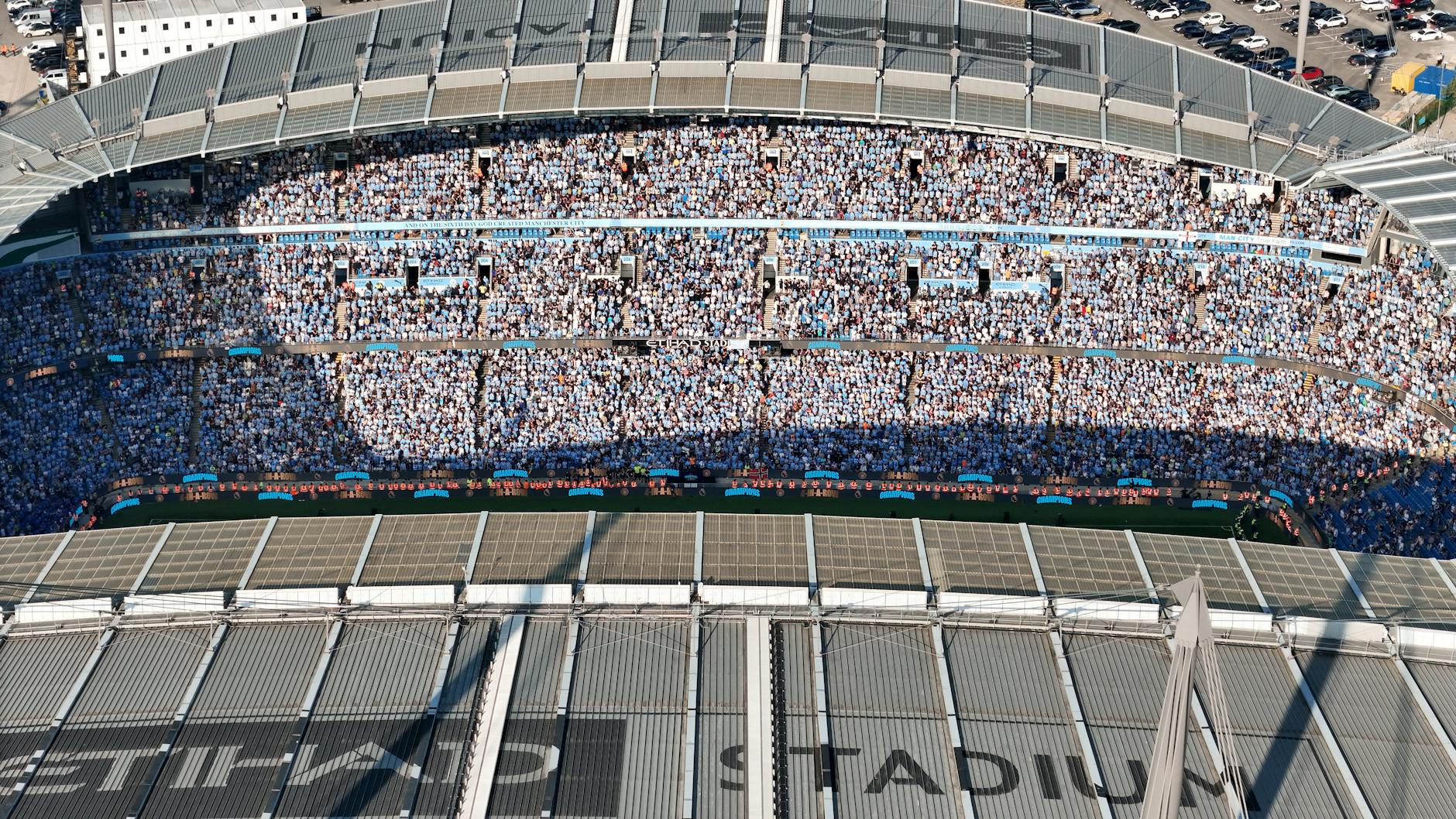
Photo by Mylo Kaye on Pexels
When should you choose City over Arsenal?
Choose a Manchester City premium over an Arsenal asset when the City player has a clearer route to 90 minutes, stronger captaincy appeal, or a significantly more advanced position. Choose Arsenal instead when City’s lineup remains uncertain and the Arsenal player offers reliable minutes with defensive or attacking contribution. This is not a loyalty test; it is a probability calculation, and your club scarf cannot protect you from a 1-point cameo.
According to the International Football Association Board Laws of the Game, substitutions and match participation shape how players can contribute, but FPL scoring adds its own minutes thresholds and bonus mechanics. In practical terms, a 25-minute appearance can destroy the value of an otherwise attractive pick if the player was expected to start. I have lost enough points to late rotation to treat team sheets as sacred documents.
At approximately one-third of your pre-season review, compare each premium player using the following questions:
- Is the player expected to start?
- Does the player occupy a high-value attacking position?
- Is the player on penalties or major set pieces?
- Can you captain the player without feeling reckless?
- Does selecting the player block a stronger future transfer?
Ready to compare the latest tactical and fixture information?
#3 Manchester United Value Draft: Best Value
Manchester United is the best-value structure because the club opens away to Hull and then benefits from fixtures against promoted opposition. That schedule can create opportunities for attackers, defenders, and budget-friendly starters, especially if their positions are secure under the new-season tactical setup. The danger is assuming that a favourable fixture automatically eliminates away-match risk, formation changes, or rotation.
The United value draft works best when you choose players who combine three characteristics: starting potential, involvement in set pieces or attacking phases, and a price that does not force a painful downgrade elsewhere. Avoid selecting a cheap player simply to gain access to the club badge. A £4.5m defender who may not start is not value; he is a future transfer with a tiny moustache.
Promoted opponents can be attractive because their squads may need time to adjust to Premier League intensity, but early-season football is unusually noisy. New managers, transfers, injuries, and tactical experiments can overwhelm historical assumptions. Therefore, United assets should be paired with players from Arsenal or Manchester City rather than used as the entire core of your squad.
A useful value test is the replacement test: if your chosen United asset blanks, can you move to another player in the same price bracket without taking a hit? If the answer is yes, the pick is flexible. If the answer is no because your squad has £0.0m remaining and no bench cover, the player is not flexible, regardless of how attractive the fixture looks.
FPL budget midfielder and defender rotation strategies can help you identify pairs of players who cover different fixture swings without requiring immediate transfers.
United draft advantages and risks
Advantages
- Opening fixtures may provide early attacking and clean-sheet opportunities.
- Promoted opposition can create favourable matchup conditions.
- Value picks preserve money for premium captaincy options.
- A balanced United core can be upgraded after role clarity improves.
Risks
- Away matches introduce more uncertainty than home fixtures.
- New tactical roles may not be settled.
- Popular assets can become immediate selling pressures if benched.
- A favourable fixture can mask poor individual minutes security.
The information gain here is operational rather than glamorous: before selecting a budget player, record the likely substitute at the same position and the price of the next realistic upgrade. This takes two minutes and can save four points later. If your player loses his place, you already know the escape route. Most managers instead panic at 10:27 on Saturday, open the transfer screen, and make a move that looks like it was selected by a falling ladder.
How We Ranked the Three Gameweek 1 Options
The three strategies were ranked using five criteria: fixture strength, expected minutes, captaincy value, defensive or attacking role, and transfer flexibility. Fixture strength received 30% of the assessment, minutes security 25%, role quality 20%, captaincy potential 15%, and future flexibility 10%. These weights deliberately prevent a flashy fixture from overpowering serious concerns about rotation or fitness.
This approach is more useful than ranking players by last season’s total points. Historical totals can be distorted by missed matches, late positional changes, penalty duties, or long periods of unsustainable finishing. The Premier League official statistics centre is valuable for checking appearances, goals, assists, and minutes, but FPL managers must still interpret how those numbers were produced.
Ranking scorecard
| Strategy | Fixture profile | Minutes confidence | Captaincy | Flexibility | Overall view |
|---|---|---|---|---|---|
| Arsenal-led | 9/10 | 8/10 | 8/10 | 9/10 | Best overall |
| Manchester City premium | 8/10 | 6/10 | 9/10 | 7/10 | Highest upside |
| Manchester United value | 8/10 | 7/10 | 7/10 | 8/10 | Best budget balance |
These scores are planning tools, not guaranteed point forecasts. A score of 9/10 does not mean nine points, and a 6/10 minutes rating does not mean a player will definitely be benched. It means the risk-adjusted case is weaker. That distinction matters because fantasy football is a decision game under uncertainty, not a vending machine where you insert a fixture and receive a clean sheet.
One overlooked factor is information timing. The Gameweek 1 deadline arrives at 18:30 UK time on Friday, 21 August 2026, before many managers have seen a full round of competitive lineups. As a result, flexibility is worth more than usual. A squad containing several uncertain players may have higher theoretical upside but lower practical value because you cannot repair every problem before kickoff.

Photo by Tima Miroshnichenko on Pexels
What Should You Look For Before the FPL Gameweek 1 Deadline?
Before the FPL Gameweek 1 deadline, prioritise confirmed availability, likely starts, fixture quality, attacking position, and a realistic transfer plan. The strongest opening squad is not necessarily the one with the most expensive players; it is the squad with the fewest unresolved problems and at least one dependable captain. Use official club updates and the Premier League fixture list, then make your final decision before 18:30 UK time.
Start with injuries. Benjamin Sesko, Nordi Mukiele, Omar Alderete, and Jeremy Doku are listed as doubts in the available 2026/27 pre-season information, while Eli Junior Kroupi, Yankuba Minteh, William Saliba, and Jurrien Timber are listed as ruled out. Injury information changes quickly, so treat those names as a checklist rather than a permanent verdict. The best practice is to verify the latest update from the player’s club, manager press conference, or official league source.
Next, inspect expected minutes. A player who delivers 70 minutes every week can be more useful than a spectacular player who starts one match in three. This is particularly important for Manchester City, where the quality of alternatives can create selection risk. Arsenal and Manchester United also require role checks, especially where new signings or returning players challenge established starters.
Finally, choose your captain before you choose your last bench player. Captaincy doubles points and therefore magnifies mistakes, yet managers routinely spend twenty minutes debating a £4.0m defender while making a casual premium selection. Consider home advantage, opponent strength, penalties, set pieces, expected minutes, and whether the player can score through more than one route.
Final deadline procedure
- Review official injury and lineup news.
- Confirm every starting goalkeeper and at least ten plausible starters.
- Select the captain and vice-captain.
- Check your formation and bench order.
- Confirm the bank balance and planned first transfer.
- Save the team before the deadline rather than gambling on a last-second refresh.
Need a final risk check before submitting your Gameweek 1 squad?
Which Should You Pick?
Pick the Arsenal-led draft if you want the strongest balance of fixture security, defensive coverage, and future flexibility. Pick the Manchester City premium draft if you accept rotation risk in exchange for the highest attacking ceiling. Pick the Manchester United value draft if your squad needs budget efficiency and you are prepared to monitor lineups, roles, and early fixture evidence rather than blindly holding every popular selection.
My preferred structure is a hybrid: one Arsenal defensive asset, one captaincy-grade premium from Arsenal or Manchester City, and one Manchester United value player with reliable minutes. This avoids excessive exposure to one club while still targeting the three strongest opening narratives. I would also retain at least £0.5m if doing so does not weaken the starting XI, because price changes and unexpected injuries arrive faster than your confidence disappears after a 1-0 defeat.
Do not activate the Wildcard merely because two players blank. Gameweek 1 variance is enormous, and a player can miss one chance, collect a booking, or face an unexpected tactical instruction without becoming a bad pick. Use free transfers to address genuine role changes, injuries, or fixture deterioration. A -4 hit should solve a meaningful problem, not soothe your feelings after watching a rival’s substitute score.
Match Daily’s 2026 World Cup coverage focuses on match predictions, team tactics, player statistics, and tournament context, but the same evidence-first discipline applies to FPL: separate facts from noise, track role changes, and never confuse a confident opinion with a confirmed team sheet. Believe it or not — I do.
For ongoing decision support, explore weekly FPL fixture and captaincy analysis and transfer planning after Gameweek 1.
Frequently Asked Questions
Q: What are FPL Gameweek 1 tips?
A: The best FPL Gameweek 1 tips are to prioritise secure starters, strong opening fixtures, reliable captaincy, and transfer flexibility. For 2026/27, Arsenal has the strongest overall opening case against Coventry, Manchester City offers major attacking upside against Bournemouth, and Manchester United provides value through fixtures involving promoted opposition. Confirm injury news for Benjamin Sesko, Nordi Mukiele, Omar Alderete, and Jeremy Doku before selecting them. Also avoid players listed as ruled out, including William Saliba and Jurrien Timber, unless official updates change their status.
Q: How do I build an FPL Gameweek 1 team?
A: Build an FPL Gameweek 1 team by selecting a captain first, then filling the squad with secure starters from favourable fixtures. A practical sequence is to choose one premium captain, two or three reliable mid-priced assets, a goalkeeper likely to play, and bench players with genuine starting potential. Keep at least £0.5m in reserve when possible, check your formation, and rank substitutes by expected minutes rather than by price. The deadline for this season’s opening gameweek is 18:30 UK time on Friday, 21 August 2026.
Q: Is Arsenal or Manchester City better for FPL Gameweek 1?
A: Arsenal is the safer overall Gameweek 1 option, while Manchester City has the higher attacking ceiling. Arsenal’s home fixture against Coventry supports both goal and clean-sheet expectations, whereas Manchester City hosts Bournemouth and may offer the best premium captaincy upside. City’s main concern is rotation under Enzo Maresca, particularly when several elite players compete for similar positions. Choose Arsenal for security and City for upside only when the selected player’s minutes and role are sufficiently clear.
Q: What should I do if my FPL Gameweek 1 player becomes an injury doubt?
A: Replace an injury doubt when reliable information suggests the player may miss the match or lose expected minutes. First check the club’s official update, manager press conference, and Premier League information, then identify a replacement at the same price or within your available budget. Do not transfer out a player solely because of an unverified social-media rumour. If the doubt concerns a high-owned player and no clear information is available, having a strong first substitute can reduce the risk of a late withdrawal.
Q: How many transfers should I make after FPL Gameweek 1?
A: Make only the transfers required to correct injuries, lost starting roles, or clearly changed circumstances after Gameweek 1. One free transfer is often enough because a single match provides a small sample and can produce misleading results through penalties, red cards, or unusual finishing. Avoid taking a -4 hit simply to chase a player who scored once, especially if his underlying minutes or fixture quality is weaker. Review at least expected minutes, shots, touches in the box, set pieces, and upcoming fixtures before acting.
Q: Should I use the Wildcard in FPL Gameweek 1?
A: Most managers should not use the Wildcard in Gameweek 1 unless the initial squad has multiple injuries, severe rotation exposure, or a major structural error. The opening weeks generate valuable information about tactical roles, set pieces, new signings, and unexpected starters, so preserving the chip can improve decision quality. A planned early Wildcard can be reasonable when fixture swings are dramatic, but it should be based on a clear schedule and squad-repair objective rather than one disappointing score.
Q: Is it worth keeping money in the bank for FPL Gameweek 1?
A: Keeping £0.5m in the bank can be worthwhile because it improves flexibility after unexpected injuries, price changes, and emerging starters. The reserve is less valuable if it leaves your starting XI materially weaker, so compare the opportunity cost of every unused £0.1m. A flexible squad can move from a doubtful Manchester City attacker to an Arsenal midfielder or upgrade a budget Manchester United asset without taking a points hit. In a season opener filled with uncertainty, that optionality is often worth more than a marginal bench upgrade.
The safest final recommendation is straightforward: build around Arsenal, respect Manchester City’s rotation risk, use Manchester United selectively, and verify every late injury update before the deadline. Your first team does not need to win the season on Friday; it needs to remain healthy, flexible, and capable of adapting after real Premier League evidence arrives.
Want to follow the latest match predictions, tactical developments, and player statistics from Match Daily?