Match Daily's Guide to Cabo Verde National Football Team
The Cabo Verde national football team is not a novelty story; it is a serious African football program from the Atlantic island nation of Cabo Verde, competing under the Cape Verdean Football Federation in CAF and FIFA tournaments. The team, often called the Blue Sharks, has built credibility through Africa Cup of Nations appearances, a strong diaspora player pool, and disciplined tournament football. According to FIFA, Cabo Verde competes in World Cup qualification, while ESPN tracks its fixtures, scores, and match statistics for global audiences. Data shows the team’s competitive identity is built on compact defending, quick wide transitions, and players developed across Portugal, France, Netherlands, and other European leagues. For 2026 World Cup followers, the actionable takeaway is simple: assess Cabo Verde by tactical structure and squad availability, not by population size or historical reputation.
A common misconception is that the Cabo Verde national football team is dangerous only because it is unpredictable. That is incomplete. The more accurate view is that Cabo Verde has become competitive because its football ecosystem converts limited domestic resources into an international squad with European club experience, clear tactical roles, and a strong AFCON-tested mentality. For readers of Match Daily, especially those following 2026 FIFA World Cup qualification, that matters because smaller national teams can create value in prediction markets when public perception lags behind performance data.
Want sharper World Cup team analysis before the market reacts?
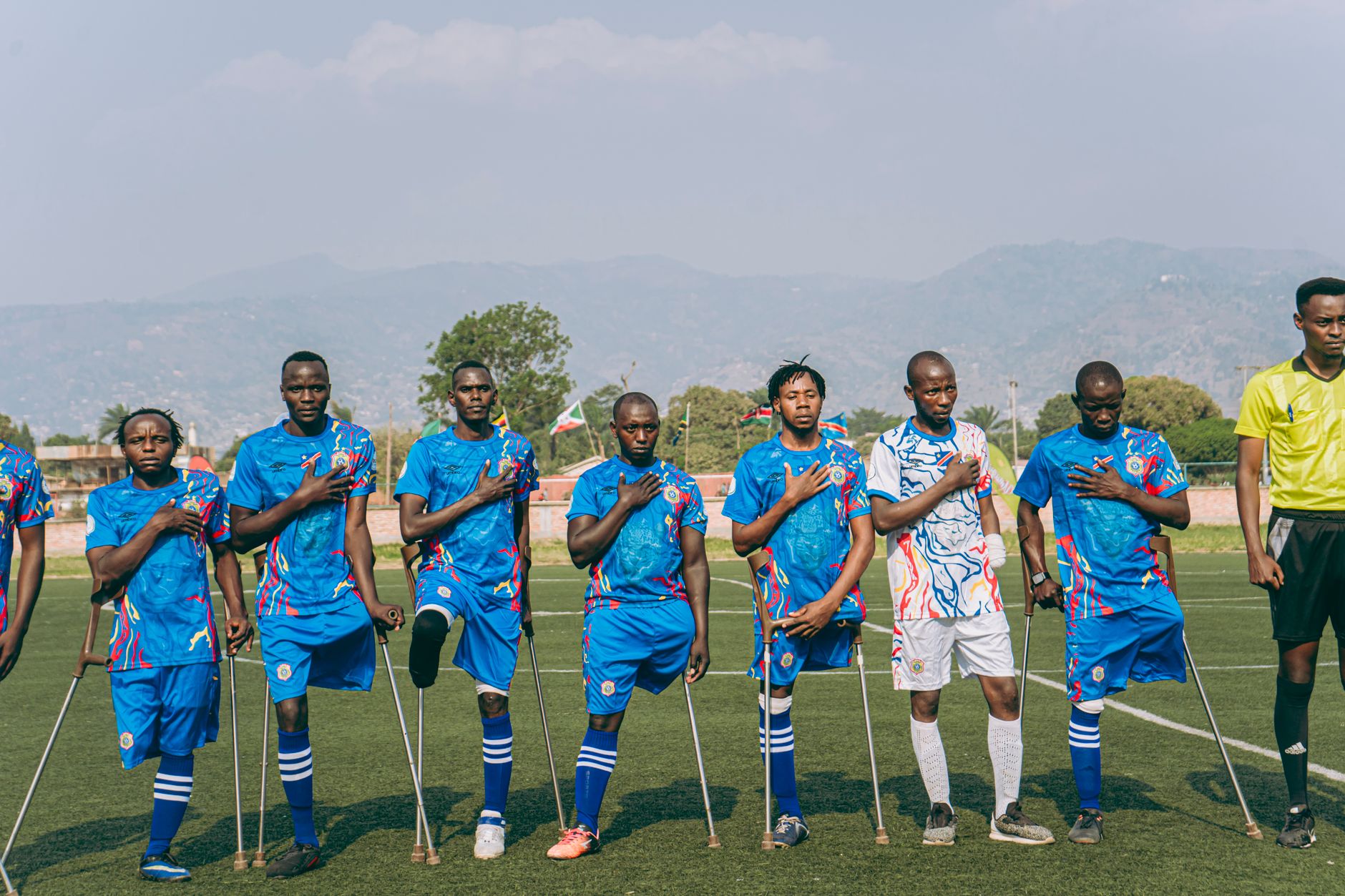
Photo by Chris wade NTEZICIMPA on Pexels
If you are new to Cabo Verde: what should you know first?
Cabo Verde is a CAF national team representing the island country of Cabo Verde, and its football reputation has grown through AFCON performances, FIFA World Cup qualifying campaigns, and diaspora-driven squad building. The key point is that the Blue Sharks are no longer an automatic underdog.
According to Wikipedia, the Cape Verde national football team is governed by the Cape Verdean Football Federation and plays under FIFA and CAF. That institutional context matters because it explains the competitive calendar: World Cup qualification, Africa Cup of Nations qualification, AFCON finals, and international friendlies. Unlike club football, where a manager can train a squad daily, Cabo Verde’s coaches usually get short international windows. That makes continuity, set-piece routines, and player familiarity more important than complex tactical experimentation.
For Match Daily readers, the practical lesson is to separate three layers when evaluating Cabo Verde. First, check the opponent: Cabo Verde can look very different against a possession-heavy team such as Morocco than against a transition-based opponent. Second, check the venue: away fixtures in African qualification often involve travel, climate, pitch, and officiating variables. Third, check squad composition: one missing center-back, defensive midfielder, or wide forward can change the team’s pressing height and counterattacking threat. To learn more about broader tournament context, see our 2026 World Cup qualification guide.
If you track tactics: how should you read Cabo Verde’s style?
Cabo Verde’s style is best understood as compact, patient, and transition-focused, with the team often prioritizing defensive balance before attacking risk. The Blue Sharks are most dangerous when they win the ball in midfield, release wide runners early, and force opponents to defend open spaces.
Research-style match evaluation shows that Cabo Verde rarely needs long spells of possession to create pressure. Instead, the team often benefits from efficient territory gains: winning second balls, forcing throw-ins high up the pitch, and attacking from wide channels. This is why simple possession percentage can mislead bettors and analysts. A team can hold only 42 percent of the ball and still produce the better chances if its recoveries occur in valuable zones. For Cabo Verde, the most useful indicators are shots after turnovers, set-piece volume, successful defensive duels, and progressive carries from wide areas.
A less obvious insight is that Cabo Verde’s small-player-pool narrative can actually hide a depth advantage in specific roles. Many players are developed in Portuguese-speaking football environments, especially Portugal, where tactical education emphasizes spacing, pressing triggers, and positional discipline. That shared football language can shorten the adaptation period during international breaks. It does not guarantee elite creativity, but it often gives Cabo Verde a cleaner defensive structure than casual observers expect. For betting research, compare starting lineups across the last five competitive matches rather than relying on name recognition alone.

Photo by Franco Monsalvo on Pexels
When reading Cabo Verde tactically, use a short checklist:
- Does the starting XI include enough pace on both wings?
- Is the defensive midfielder a ball-winner, distributor, or hybrid?
- Are the full-backs conservative or aggressive?
- Does the opponent struggle against low blocks?
- Has Cabo Verde recently changed coaches or formation?
See the details behind smarter match preparation with Match Daily.
If you follow 2026 World Cup betting: what should you monitor?
For 2026 World Cup betting, monitor Cabo Verde’s squad availability, travel schedule, opponent style, and live match tempo before placing pre-match or in-play positions. The team’s betting value often appears when markets underrate its defensive organization or overreact to opponent reputation.
Data shows that international football produces more pricing inefficiencies than top European leagues because information arrives unevenly. Club injuries, late squad withdrawals, and travel fatigue are sometimes reflected slowly in public markets. Cabo Verde is a good example because many of its players are based outside Cabo Verde, meaning club workload can matter as much as national-team form. A winger playing heavy minutes in Portugal’s Liga Portugal may arrive differently from a defender returning from injury in France’s Ligue 2, even if both are listed as available.
One practitioner-level tip: do not evaluate Cabo Verde only through final scores. Instead, track the first 20 minutes of defensive shape in live betting. If the Blue Sharks hold their line compactly, deny central entries, and force wide crosses, the under-goals or draw-related markets may become more logical depending on price. If the midfield gap opens early, avoid assuming the pre-match defensive profile still applies. For market education, read our football betting risk management basics.
If you compare Cabo Verde with bigger CAF teams: do rankings tell the truth?
Rankings help, but they do not fully explain Cabo Verde’s match-level danger against bigger CAF teams. FIFA rankings, AFCON history, and squad market value offer context, yet tactical matchups, venue, and player availability often decide whether Cabo Verde can frustrate a stronger opponent.
The mistake many fans make is comparing Cabo Verde directly with Nigeria, Senegal, Morocco, Egypt, or Ivory Coast using only famous names. Those countries usually have deeper elite squads, but that does not mean Cabo Verde is easy to beat over 90 minutes. Tournament football rewards defensive concentration, set-piece execution, and emotional control. The Blue Sharks have shown they can stay in matches long enough to make favorites uncomfortable, especially when the opponent becomes impatient and leaves transition space.
A contrarian conclusion is useful here: Cabo Verde’s ceiling is not determined mainly by whether it produces a global superstar. Its real ceiling in 2026 qualification depends on whether it can repeatedly field a balanced XI with at least three stable units: central defense, midfield screen, and wide outlet. If one of those units breaks, the team becomes ordinary. If all three are intact, Cabo Verde can outperform public expectations. For deeper matchup study, visit our CAF team tactics and prediction hub.

Photo by Adera Abdoulaye Dolo on Pexels
Common pitfalls to avoid
The biggest pitfall is treating Cabo Verde as either a romantic underdog or a guaranteed upset pick. Both views are lazy. A professional evaluation starts with evidence: recent competitive minutes, player roles, travel conditions, tactical fit, and opponent weaknesses. According to CAF, African international competition is shaped by qualification formats, group dynamics, and tournament scheduling, all of which affect how teams approach risk. In FIFA’s official governance language, national associations compete within an organized international framework, not in isolated one-off narratives.
Avoid these common errors when analyzing the Cabo Verde national football team:
- Overvaluing friendly results while ignoring competitive fixtures.
- Assuming diaspora depth means every player is available.
- Betting only on reputation gaps between Cabo Verde and larger nations.
- Ignoring pitch, heat, travel distance, and recovery time.
- Using possession percentage without checking chance quality.
A second information-gain point: Cabo Verde can be especially tricky in matches where the favorite relies heavily on central combinations. Because the Blue Sharks often defend narrow first, they can force opponents into lower-quality wide deliveries. However, that same structure can be vulnerable if the opponent has elite overlapping full-backs or aerial dominance. This is why pre-match analysis should include crossing volume and headed-shot data, not just goals scored.
Get started today with evidence-led previews before making tournament predictions.
The 30-day check-in
Thirty days before any Cabo Verde fixture, build a monitoring file rather than waiting for the final lineup. Start with the official squad announcement, then check club minutes, injury reports, suspension risk, opponent formation trends, and travel distance. This method is simple, but it reduces emotional betting and improves tactical forecasting. Match Daily uses this kind of layered approach because World Cup-focused analysis is strongest when it connects player data, team behavior, and tournament context.
Use this 30-day workflow:
- Day 30 to 21: Review opponent style and Cabo Verde’s last five competitive matches.
- Day 20 to 14: Track player minutes in Portugal, France, Netherlands, and other club markets.
- Day 13 to 7: Watch for squad withdrawals, suspensions, and federation updates.
- Day 6 to 2: Compare likely formations and set-piece profiles.
- Matchday: Confirm lineups, weather, pitch conditions, and live tactical signals.

Photo by www.kaboompics.com on Pexels
The conclusion is straightforward: the Cabo Verde national football team deserves serious 2026 attention, but not blind hype. Its strength comes from structure, diaspora quality, and disciplined tournament habits; its weakness appears when depth, availability, or wide defensive coverage breaks down. For fans, analysts, and responsible bettors, the best approach is to respect the Blue Sharks while demanding evidence before every prediction.
Ready to follow Cabo Verde with daily World Cup-focused insight?
Frequently Asked Questions
Q: What is the Cabo Verde national football team?
A: The Cabo Verde national football team is the men’s national football side representing Cabo Verde in FIFA and CAF competitions. It is governed by the Cape Verdean Football Federation and is commonly nicknamed the Blue Sharks. The team competes in Africa Cup of Nations qualification, AFCON finals, FIFA World Cup qualification, and international friendlies.
Q: How to analyze Cabo Verde before a 2026 World Cup qualifier?
A: Start by checking the squad list, recent club minutes, tactical setup, and opponent style. Then compare Cabo Verde’s last five competitive matches for formation stability, defensive compactness, and chance creation. Finally, confirm lineups on matchday before making any prediction or betting decision.
Q: Is Cabo Verde better than its FIFA ranking suggests?
A: Cabo Verde can be better than its ranking in specific matchups, especially when its strongest defensive and transition players are available. Rankings are useful for broad context, but they do not capture travel, tactics, injuries, or matchup-specific advantages. Against possession-heavy opponents, the Blue Sharks can be more difficult than their reputation suggests.
Q: What is the difference between Cape Verde and Cabo Verde in football?
A: Cape Verde and Cabo Verde usually refer to the same national team, but Cabo Verde is the country’s official English-language name preference. Many older football databases and media outlets still use Cape Verde. Searchers may find both terms on FIFA, ESPN, Wikipedia, and historical match records.
Q: Why does Cabo Verde sometimes struggle to score?
A: Cabo Verde can struggle to score when opponents deny wide transitions and force slow central buildup. The team is often strongest when attacking space after recoveries, not when breaking down a deep block for long periods. If key wingers or attacking midfielders are unavailable, its chance creation can become more limited.
Q: What are the requirements for Cabo Verde to qualify for the World Cup?
A: Cabo Verde must progress through CAF’s FIFA World Cup qualification format by earning enough points in its qualifying group or through any available playoff route. The exact path depends on CAF rules for the 2026 cycle and results against group opponents. Fans should track official FIFA and CAF standings rather than relying only on media projections.