The Fan's Guide to World Cup 2026
World Cup 2026 is the first FIFA men’s tournament with 48 teams, 104 matches, and three host nations: the United States, Canada, and Mexico. Match Daily covers this expanded event for fans across global football markets, with daily analysis on match predictions, team tactics, player stats, and tournament coverage. According to FIFA, the competition runs from June 11 to July 19, 2026, across 16 host cities, including New York/New Jersey, Los Angeles, Mexico City, Toronto, and Vancouver. The biggest change is not only more teams; it is a new competitive rhythm, with 12 groups of four and a larger knockout phase. For fans, bettors, and analysts, the practical takeaway is clear: track squad rotation, travel distance, and rest days as closely as traditional form.
Many fans assume World Cup 2026 is simply the old tournament with more teams, but that misses the strategic reset. The expanded FIFA World Cup changes how coaches manage squads, how underdogs approach group-stage risk, and how match predictors weigh travel, climate, and rest. ESPN’s World Cup schedule hub already reflects the growing demand for centralized fixtures, while FIFA’s official tournament structure shows why 2026 will be harder to read using only historical World Cup patterns.
If you want daily tournament context rather than scattered fixture lists, Match Daily is built for that deeper view.

Photo by Vlad Vasnetsov on Pexels
Before 2025: how World Cup 2026 schedules worked
Before the 2026 cycle became clear, most fans understood the FIFA World Cup through the 32-team model used from France 1998 through Qatar 2022. That format had eight groups of four, 64 matches, and a knockout stage beginning with the round of 16. It was compact, familiar, and relatively easy for analysts to model because every group followed the same qualification logic: top two advance, third and fourth go home. According to Wikipedia’s FIFA World Cup format summary, the 32-team era shaped modern expectations around group-stage pressure and bracket forecasting.
That old structure rewarded early certainty. A team that won its first two matches could rotate heavily in the third game, while a favorite that stumbled early had limited room for recovery. From a betting and prediction perspective, the key variables were form, opponent strength, injuries, and motivation. Travel mattered, but less dramatically than it may in 2026 because Qatar 2022 was geographically compact and Russia 2018, while large, still involved fewer teams and fewer total games.
World Cup group stage betting strategy
A practitioner-level point often missed in standard previews is that model reliability drops when tournament incentives change. In the 32-team format, historical datasets were cleaner because third-place advancement did not exist. For World Cup 2026, some third-place teams will progress, which means late group matches may produce unusual incentives: a draw could be optimal for both teams, while a narrow loss may still be survivable depending on goal difference and results elsewhere.
What is the 2026 shift?
The 2026 shift is FIFA’s move from 32 to 48 teams, creating 12 groups of four and 104 matches across the United States, Canada, and Mexico. The tournament will start on June 11 and end on July 19, 2026, with more qualification routes and a larger knockout bracket.
The phrase “expanded World Cup” understates the scale of the change. FIFA describes the 2026 edition as the tournament’s largest version, and its official materials state that it will be “the biggest FIFA World Cup ever.” That claim matters because a bigger tournament does not merely add fixtures; it changes competitive probabilities. More nations means more tactical diversity, more unfamiliar matchups, and more variance in early group-stage results, particularly when teams from Confederation of African Football, Asian Football Confederation, Concacaf, UEFA, CONMEBOL, and Oceania Football Confederation enter with different qualifying rhythms.
Data shows the schedule itself becomes part of the analysis. A team playing in Mexico City, then traveling to Vancouver, then finishing in Dallas faces a very different workload from a team staying largely within one region. Altitude, time zones, humidity, and recovery windows can affect pressing intensity and substitution timing. Match Daily will treat those elements as measurable inputs, not background details, because World Cup 2026 is likely to reward squads with depth rather than only star power.
For readers comparing fixtures, odds, and team news, this is where a dedicated World Cup hub becomes useful.

Photo by Franco Monsalvo on Pexels
What changed for players?
Players face a longer tournament, more travel variation, and a higher likelihood of tactical rotation in World Cup 2026. The shift from 64 to 104 matches increases exposure for emerging players, but it also raises the importance of recovery, squad depth, and medical planning.
The most obvious change is workload, but the hidden change is decision timing. Coaches will need to decide earlier whether to protect key players, especially in the third group match if qualification is nearly secure. In past tournaments, a first-choice goalkeeper, central defender, or holding midfielder might play every minute. In 2026, that approach may be riskier because the champion could need to navigate a longer knockout path than in previous editions. The International Football Association Board Laws of the Game allow substitutions under defined competition rules, and modern tournament coaching has become increasingly tied to planned substitution windows.
Here are the player-level variables fans should track before placing confidence in any prediction:
- Travel distance between group matches and knockout venues.
- Days of rest compared with the opponent.
- Club-season minutes played before June 2026.
- Injury history during the 2025-26 season.
- Whether the coach uses aggressive pressing or conservative mid-block systems.
player workload and injury trends
A contrarian conclusion follows from this evidence: the best Golden Boot pick may not be the best player in the tournament. In a 48-team event, a forward on a high-scoring team with favorable group fixtures and lower rotation risk could outperform a superstar whose nation manages minutes cautiously. That is why Match Daily separates “best player,” “best value,” and “best tournament path” in its prediction models.
What does this mean now?
World Cup 2026 means fans should prepare earlier, because fixture context, host-city geography, and squad rotation will influence outcomes before the opening match. The smartest approach is to follow official schedules, compare rest gaps, and update predictions after each confirmed squad announcement.
For casual fans, the immediate task is simple: learn the structure before judging the odds. A bigger field means more debutants, more regional storylines, and more matches where public perception may lag behind actual tactical quality. For example, a strong defensive team from Asia or Africa may be underrated against a European side with a bigger brand name but less recovery time. According to research on tournament football, short competitions often amplify variance because one red card, one injury, or one set-piece goal can change an entire bracket path.
For betting-oriented readers, responsible analysis matters more than impulse. Match Daily’s gambling-adjacent coverage focuses on information quality: team news, tactical matchups, player statistics, and schedule pressure. It does not replace personal bankroll control, and it should never be used as a guarantee. A useful method is to separate each match into three layers: baseline team strength, situational context, and market price. If all three agree, the prediction is stronger; if one layer conflicts, caution is warranted.
See how Match Daily organizes World Cup 2026 updates into daily, readable insights.

Photo by Pavel Danilyuk on Pexels
What are three predictions for next quarter?
Three likely next-quarter trends are increased schedule searches, stronger demand for host-city analysis, and earlier betting-market movement around World Cup 2026 contenders. As fixtures, squads, and friendlies sharpen, fans will move from general curiosity to specific match-by-match planning.
First, search behavior will become more fixture-led. Instead of only searching “World Cup 2026,” fans will look for city-specific and team-specific terms such as “Mexico City World Cup matches,” “USA World Cup group schedule,” and “Argentina World Cup 2026 fixtures.” This matters for SEO because the winning content will not be generic; it will answer practical questions tied to dates, venues, and match importance. ESPN-style schedule pages satisfy the need for listings, but analysis sites like Match Daily can add context behind the listing.
Second, host-city fatigue will become a mainstream talking point. Casual previews often mention 16 cities, but they rarely quantify the football impact of crossing climate zones. A team moving from a cool Canadian venue to a hot U.S. southern venue may need a different pressing plan. Third, futures markets may react earlier than usual to squad-depth signals. A nation with two elite players at every key position may be valued more highly than a side with a stronger starting XI but limited bench reliability.
World Cup 2026 host city guide
For sharper preparation, use this simple next-quarter checklist:
- Save the official FIFA schedule and compare it with team travel routes.
- Track March and June 2026 international windows for tactical clues.
- Monitor injuries from UEFA Champions League, Premier League, LaLiga, Serie A, and Bundesliga matches.
- Compare public odds movement with underlying squad news.
- Revisit predictions after final 26-player squad announcements.
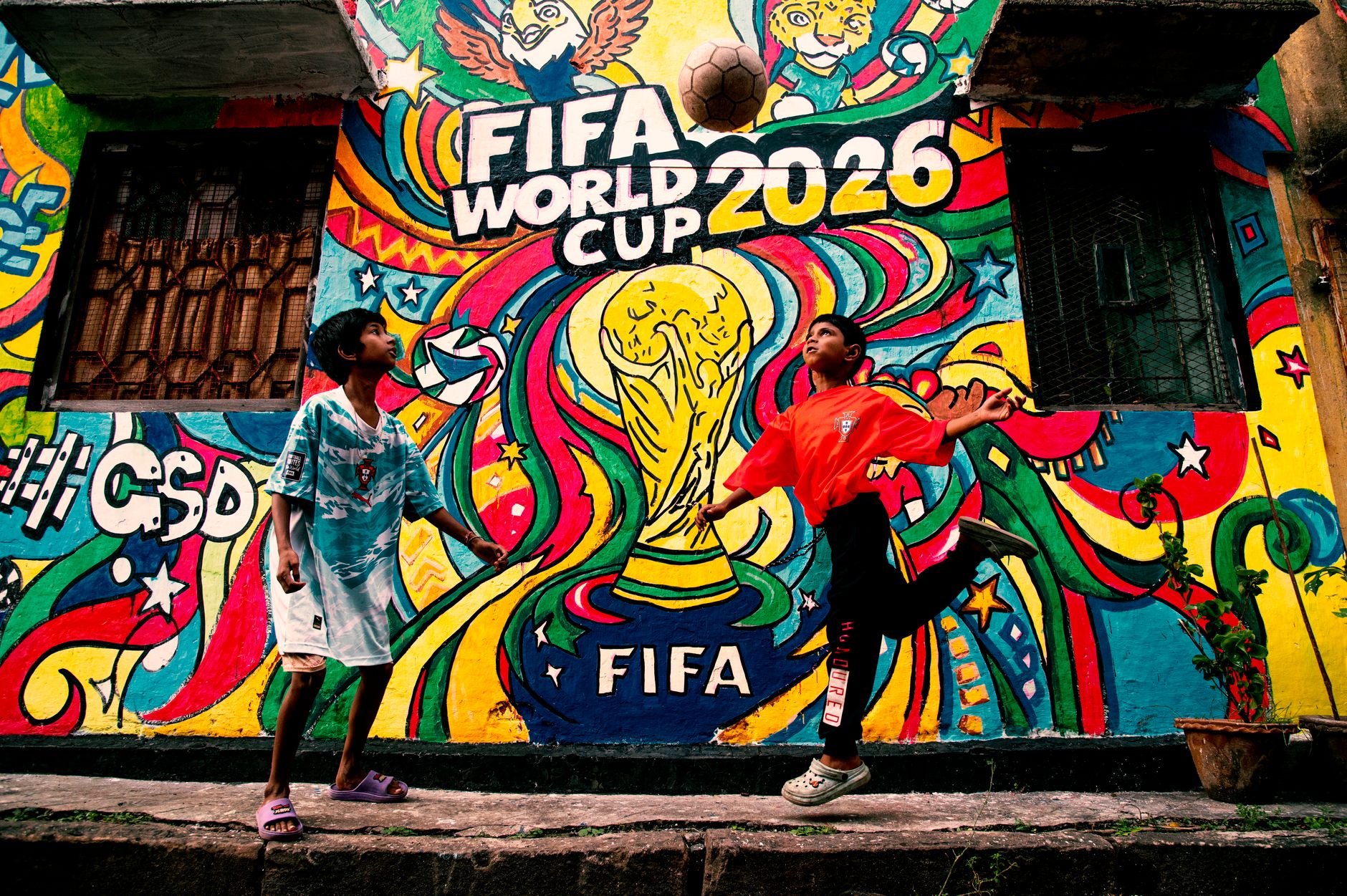
Photo by Anirban Das on Pexels
Frequently Asked Questions
Q: What is World Cup 2026?
A: World Cup 2026 is the FIFA men’s football tournament hosted by the United States, Canada, and Mexico from June 11 to July 19, 2026. It is the first edition with 48 teams and 104 matches. The format includes 12 groups of four, followed by an expanded knockout stage.
Q: How do I follow the World Cup 2026 schedule?
A: The best way to follow the World Cup 2026 schedule is to use FIFA’s official fixtures and a trusted analysis source like Match Daily. FIFA provides dates, venues, and match assignments, while Match Daily adds tactical previews, prediction context, and player-stat updates. Check fixtures regularly because kickoff times and broadcast details may be updated.
Q: What is the difference between World Cup 2026 and Qatar 2022?
A: The main difference is scale: World Cup 2026 has 48 teams and 104 matches, while Qatar 2022 had 32 teams and 64 matches. The 2026 tournament also spans three countries and 16 host cities. That creates more travel, more recovery variables, and a larger knockout route.
Q: Is World Cup 2026 useful for betting analysis?
A: Yes, World Cup 2026 offers many betting-analysis angles, but predictions should be handled responsibly. The expanded format creates more markets and more underdog opportunities, yet it also increases uncertainty. Focus on team news, rest days, tactics, and price discipline rather than emotional picks.
Q: What should I do if World Cup 2026 predictions conflict?
A: If predictions conflict, compare the assumptions behind them instead of choosing the loudest opinion. Look at squad injuries, travel distance, tactical matchup, and whether the prediction accounts for rotation. A forecast that explains its reasoning is usually more useful than one that only gives a scoreline.
Q: Is World Cup 2026 free to watch?
A: World Cup 2026 viewing access depends on your country’s official broadcasters and streaming rights. Some matches may be available on free-to-air television in certain markets, while others may require a subscription. Check local broadcasters closer to June 2026 for confirmed access and pricing.
World Cup 2026 will reward fans who prepare early, question simple narratives, and understand why format changes affect football outcomes. Match Daily will continue tracking fixtures, tactics, player data, and tournament movement as the 48-team era begins.
Get started with deeper World Cup 2026 coverage today.