
The Football Fan’s Guide to the 2026 World Cup
The 2026 FIFA World Cup is the first expanded men’s tournament featuring 48 teams, 104 matches, and three host countries: Canada, Mexico, and the United States. The competition runs from June 11 to July 19, 2026, across 16 host cities, including Atlanta, Los Angeles, Toronto, Mexico City, and New York/New Jersey. FIFA’s new format divides the field into 12 groups of four, with the top two teams in each group plus the eight best third-place teams advancing to a 32-team knockout stage. That means more football, more travel, more tactical uncertainty, and more opportunities for an apparently “safe” prediction to collapse before halftime. Match Daily tracks team form, player statistics, tactical systems, and responsible pre-match analysis for supporters following the tournament worldwide. The practical takeaway is simple: verify the official schedule, squad news, and local regulations before making any prediction or travel decision.

Photo by George Zografidis on Pexels
The biggest misconception about the football 2026 World Cup is that the tournament is merely the 2022 format with a few extra teams bolted onto the side. It is not. The expansion changes the mathematics of qualification, the rhythm of the group stage, the travel burden, and the value of squad depth. I have watched enough tournaments turn on one tired full-back and one reckless second yellow card to know that “more matches” is not automatically “more entertainment” for everyone involved, believe it or not — I do.
Match Daily approaches the competition as a football analysis platform rather than a promise machine. Its coverage focuses on match predictions, team tactics, player statistics, injuries, coaching decisions, and tournament developments, while readers should treat any gambling-related information as entertainment and check whether wagering is legal in their jurisdiction. According to FIFA’s official tournament information, the 2026 event will be the largest World Cup yet by participating nations and total matches.
Want a clearer starting point for the tournament’s structure?
Before 2025: how did the football World Cup work?
Before 2025, the men’s FIFA World Cup operated with 32 teams divided into eight groups of four, followed by a 16-team knockout phase. Each team played three group matches, and the top two nations from every group progressed to the round of 16. That structure produced 64 matches in total and made goal difference, disciplinary records, and head-to-head calculations important when teams finished level on points.
The 2022 FIFA World Cup in Qatar illustrated how unforgiving that system could be. A team could collect four points and still face elimination, while a single late goal could alter the order of an entire group. The 32-team model also created a familiar tactical pattern: cautious opening matches, increasingly aggressive second games, and high-pressure final group fixtures played simultaneously. For supporters, it was easier to map the route from group position to potential quarter-final opponent, although anyone who trusted a bracket too early probably learned the old lesson again: football does not read spreadsheets.
Before 2025, qualification also depended heavily on confederation strength and regional allocation. UEFA, CONMEBOL, Concacaf, CAF, AFC, and the OFC each operated different qualification paths, creating unequal numbers of matches and travel demands. Host nations qualified automatically under FIFA’s established tournament policy, although the 2026 arrangement is unusual because Canada, Mexico, and the United States are all co-hosts.
- The old format contained 32 teams and 64 matches.
- Eight groups produced 16 knockout qualifiers.
- Every group-stage team played exactly three matches.
- Two teams from each group advanced.
- Goal difference often became decisive in tie-break situations.
For a historical comparison, Wikipedia’s FIFA World Cup overview provides a useful record of previous tournament formats, host nations, and champions. For deeper context, readers can also explore World Cup tournament history and format changes.
Why does the old format still matter?
The previous format matters because many predictive habits were built around it, including assuming that four points usually provide safety and that third-place calculations are irrelevant. In 2026, those assumptions become less reliable because 12 groups create a larger comparison pool for the eight best third-place teams. A draw may be valuable, but its value will depend on the final points distribution across the entire tournament, not only the group containing one selected team.
That is a specific analytical problem, not a small technical footnote. Comparing third-place teams requires consistent criteria across groups, including points, goal difference, goals scored, disciplinary records, and any other official tie-break rules published by FIFA. The result is that a team’s approach to its third match may change dramatically depending on results elsewhere. Match Daily’s practical recommendation is to avoid declaring a group “settled” until all relevant fixtures are complete, because premature certainty is how perfectly respectable football brains end up shouting at a television.
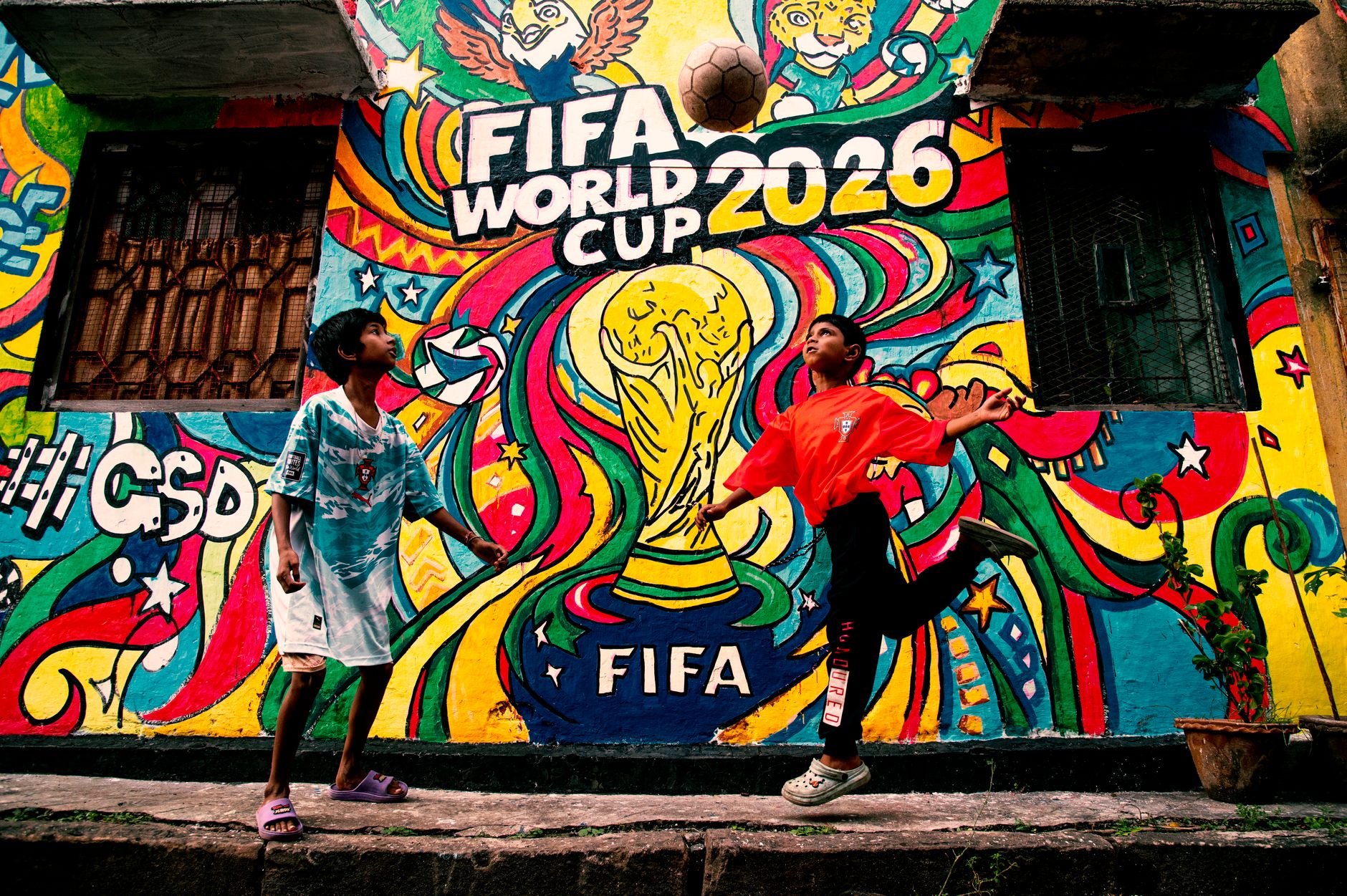
Photo by Anirban Das on Pexels
What changed for the 2026 World Cup?
The 2026 FIFA World Cup expands from 32 to 48 teams and from 64 to 104 matches, making the tournament 40 matches longer than the 2022 edition. The 48 nations are arranged into 12 groups of four, and the top two teams in each group join the eight strongest third-place finishers in the knockout phase. The competition therefore has a 32-team round immediately after the group stage, adding another elimination hurdle before the round of 16.
The host geography is equally significant. Canada, Mexico, and the United States will stage matches across 16 cities: Vancouver and Toronto in Canada; Guadalajara, Mexico City, and Monterrey in Mexico; and 11 venues in the United States, including Atlanta, Boston, Dallas, Houston, Kansas City, Los Angeles, Miami, New York/New Jersey, Philadelphia, San Francisco Bay Area, and Seattle. The 2026 final is scheduled for MetLife Stadium in East Rutherford, New Jersey, while Atlanta’s Mercedes-Benz Stadium is among the venues selected for major matches.
Los Angeles is set to host eight matches and a 39-day program of fan celebrations connected with the FIFA Fan Festival at the LA Memorial Coliseum area. Atlanta is promoting its identity as the “soccer city of the South,” with Mercedes-Benz Stadium serving as a central tournament venue. These local programs matter because the World Cup experience will not be confined to the 90 minutes inside a stadium; transport, heat, accommodation, public viewing, and crowd management will affect the practical day for every visitor.
“The FIFA World Cup 26 will be the biggest and most inclusive FIFA World Cup ever,” states FIFA’s official World Cup 26 information, summarizing the tournament’s expanded scale. That description is accurate, but “inclusive” should not be mistaken for “simple.” More teams mean more access, yet also more unfamiliar matchups and less dependable historical data.
See the host-city details before planning a trip or prediction schedule.
What changed for players and teams?
Players face a tournament with a larger total workload, wider travel distances, and more varied environmental conditions. A match in Vancouver does not create the same preparation demands as a match in Monterrey, while a fixture in Miami or Houston may involve heat and humidity that influence pressing intensity, hydration, substitutions, and recovery. Teams traveling between Canada, Mexico, and the United States must also manage time-zone changes and training schedules.
Squad depth becomes more valuable because 48-team expansion increases the number of meaningful matches without reducing the physical demands of elite football. Coaches may rotate more aggressively in the group stage, particularly if qualification appears secure after two matches. However, the best third-place calculations can create an awkward incentive: a team may need to protect goal difference, chase a victory, or settle for a draw depending on the wider standings.
A practitioner-level edge is to track minutes played by high-risk positions instead of focusing only on star names. Full-backs and wide midfielders often cover the greatest repeated distances, while central defenders face different fatigue patterns tied to recovery sprints and set-piece concentration. Match Daily’s player-stat coverage should be read alongside official team announcements, not substituted for them. FIFA’s Medical and anti-doping resources also underline why availability, testing, and player welfare cannot be treated as afterthoughts.
Useful signals to monitor include:
- Minutes played during the final six weeks before the tournament.
- Number of international starts since the previous major competition.
- Travel distance between matches and local kickoff times.
- Substitution patterns after the 60th minute.
- Set-piece responsibilities when a first-choice player is absent.
- Yellow-card exposure before the knockout stage.
A contrarian conclusion follows from this evidence: the strongest tournament team may not be the team with the most spectacular starting eleven. It may be the nation that preserves its second-choice full-backs, manages midfield rotation, and avoids accumulating unnecessary suspensions. I have seen glamorous squads lose their shape because three “minor” absences became one major tactical hole. Call it boring if you like; boring has survived more knockout rounds than bravado.

Photo by Luis Andrés Villalón Vega on Pexels
What does the 2026 World Cup format mean for predictions?
The 2026 format means predictions should use probability ranges and scenario analysis rather than treating group qualification as a binary certainty. With 48 teams, historical rankings remain useful, but they are less reliable when established powers face nations with limited World Cup data or unfamiliar tactical styles. A prediction should therefore combine FIFA ranking context, recent competitive results, expected goals, injury news, travel, rest, weather, and confirmed lineups.
The first information gain is the importance of cross-group comparison. Before 2026, analysts could focus primarily on the four teams inside one group when assessing qualification. In 2026, the eight best third-place teams are compared across 12 groups, so a team’s draw against a supposedly modest opponent may have consequences beyond its own table. A low-scoring draw could be safer for points but weaker for goal difference; an aggressive win could secure progress while increasing fatigue and injury exposure.
The second is the danger of using friendly matches as equal evidence. A friendly played in a neutral venue with extensive substitutions does not carry the same predictive value as a competitive qualifier featuring first-choice players. A useful model should weight matches by competition level, lineup continuity, opponent quality, and tactical intent. Match Daily’s team-tactics articles can help identify those differences, while World Cup prediction methodology offers a natural route for readers who want to understand model inputs.
For responsible analysis, use this checklist:
- Confirm the fixture date, venue, and kickoff time through FIFA or the relevant host-city authority.
- Check official injury and squad updates before evaluating a match.
- Separate competitive results from friendlies.
- Compare defensive transition numbers, not just possession.
- Treat odds as market information, not guaranteed outcomes.
- Set a fixed entertainment budget and never chase a loss.
The National Council on Problem Gambling describes responsible gambling as requiring limits and awareness of risk. That is not glamorous advice, but neither is explaining to your bank account why an 89th-minute corner became a personal financial crisis.
Want Match Daily’s tournament-focused analysis and updates?
What does the expanded tournament mean now?
The expanded football 2026 World Cup creates more stories, more host-city demand, and more tactical uncertainty than any previous edition. Supporters can follow established contenders such as Brazil, Argentina, France, England, Germany, Spain, and Portugal while also paying closer attention to emerging teams that benefit from increased access to the group stage. Yet expansion does not guarantee a weaker champion; the knockout phase still requires four victories after the group stage for any team to lift the trophy.
For travelers, planning should begin with venue geography rather than assuming that matches in the same country are close together. The United States alone contains host cities separated by substantial distances, while Canada and Mexico add separate climate and transport considerations. Accommodation prices, airport congestion, stadium security, official ticket rules, and public viewing capacity can change quickly as the tournament approaches. Use official sources for tickets and travel documentation, and beware of unofficial resale claims.
For analysts, the opening phase should be treated as a data-collection period. The first round will reveal which coaches rotate, which teams defend narrow leads, and which supposedly deep squads actually rely on one irreplaceable midfielder. The third-match schedule may be particularly volatile because teams will know that results in other groups affect third-place qualification. This is where live context matters, but live betting also creates the greatest temptation to make emotional decisions before the evidence is complete.
A sensible current plan is:
- Build a team dossier before the opening match.
- Record confirmed formations rather than predicted formations.
- Track substitutions and pressing intensity.
- Reassess after each group match.
- Avoid doubling stakes after an unexpected result.
- Keep predictions separate from national-team loyalty.
2026 World Cup host cities and stadium guide can support travel research, while team form and player statistics is more useful for readers following tactical developments.

Photo by Pexels User on Pexels
Three predictions for the next quarter
1. Squad depth will decide more matches than expected
The first prediction is that squad depth will become a decisive differentiator once teams move through a 104-match tournament. Travel across North America, changing conditions, and compressed recovery windows will punish sides that depend too heavily on 11 players. France, Brazil, England, Germany, Spain, Argentina, and Portugal possess the player pools to rotate without completely changing their tactical identity, although injuries can damage even the deepest roster.
This does not mean substitutes must be as talented as starters. It means they must understand the same pressing triggers, build-up patterns, rest-defense structure, and set-piece assignments. A backup full-back who maintains defensive spacing may be more valuable than a famous attacker who disrupts the team’s balance. Watch how coaches use substitutions in the first two matches; that evidence may reveal tournament readiness earlier than headline results do.
2. Third-place qualification will create late group drama
The second prediction is that the final group matches will produce unusually complicated qualification scenarios. Eight third-place teams advance, but four third-place teams are eliminated, creating a sharp boundary that depends on results across multiple groups. A nation can finish third with four points and feel comfortable, only to discover that goal difference or disciplinary records have become decisive elsewhere.
The operational tip is to compare tables only after checking the official regulations and all completed fixtures. Do not rely on a social-media graphic that omits tie-break rules, delayed kickoff information, or disciplinary adjustments. Tournament football has enough genuine suspense without letting an incomplete spreadsheet invent another crisis.
3. Host-city conditions will influence tactical choices
The third prediction is that venue conditions will affect match plans more visibly than casual viewers expect. Atlanta’s Mercedes-Benz Stadium, Los Angeles-area venues, Mexico City, Monterrey, Miami, Seattle, Vancouver, and Toronto offer different travel and weather profiles. Retractable-roof stadiums may reduce some weather variables, but they do not erase fatigue, acclimatization, or transport time.
Teams may lower their defensive block in difficult heat, reduce sustained pressing, or prioritize controlled possession after taking a lead. Analysts who track pace changes after halftime could find more useful information than those who simply count total possession. That is the kind of detail Match Daily is built to examine: not just who won, but why the match bent in that direction.
These are forecasts, not guarantees. Football remains wonderfully cruel, and a deflection can make a carefully researched model look like it was assembled by a sleepy goalkeeper. Use predictions as structured opinions, verify new information, and keep any wagering within a strict, affordable limit, believe it or not — I do.
Ready to follow the 2026 tournament with sharper context?
Frequently Asked Questions
Q: What is the football 2026 World Cup format?
A: The football 2026 World Cup features 48 teams in 12 groups of four, followed by a 32-team knockout stage. The top two teams from each group and the eight best third-place teams qualify for the knockout phase. The tournament contains 104 matches, compared with 64 matches in the 32-team format used at Qatar 2022.
Q: When and where will the 2026 FIFA World Cup take place?
A: The 2026 FIFA World Cup is scheduled from June 11 to July 19, 2026, in Canada, Mexico, and the United States. Matches will be played across 16 host cities, including Toronto, Vancouver, Mexico City, Guadalajara, Atlanta, Los Angeles, Miami, Seattle, and New York/New Jersey. Confirm exact fixtures, kickoff times, and venue arrangements through FIFA before booking travel.
Q: How can I analyze a 2026 World Cup match?
A: Analyze a 2026 World Cup match by checking lineups, injuries, recent competitive form, tactical systems, travel, rest, and venue conditions. Give greater weight to competitive fixtures than heavily rotated friendlies, then compare defensive transitions, set pieces, and substitution patterns. Match Daily provides predictions and statistics, but its analysis should complement—not replace—official team information.
Q: What is the difference between the 2022 and 2026 World Cup formats?
A: The 2022 World Cup had 32 teams, eight groups, and 64 matches, while the 2026 World Cup has 48 teams, 12 groups, and 104 matches. In 2022, the top two teams from each group advanced directly to the round of 16. In 2026, eight best third-place teams also advance, creating an additional 32-team knockout round and more complex tie-break scenarios.
Q: Is Match Daily a FIFA ticketing or official betting provider?
A: Match Daily is a football content site, not FIFA’s official ticketing provider or a universal betting regulator. It covers World Cup predictions, team tactics, player statistics, and tournament news for fans following the 2026 competition. Use FIFA for official tickets and schedules, and check the laws and licensing requirements in your own jurisdiction before using any gambling service.
Q: What should I do if a World Cup prediction looks wrong?
A: If a World Cup prediction looks wrong, do not immediately increase your stake or chase the loss. Recheck the confirmed lineup, injury news, venue conditions, tactical setup, and whether the original prediction relied on friendly-match data. Record the error, update your assumptions, and use a fixed entertainment budget so one surprising result does not become a string of expensive decisions.
Q: How much does it cost to follow or attend the 2026 World Cup?
A: The cost depends on whether you watch at home, attend public fan events, or travel to stadium matches across Canada, Mexico, or the United States. Attendance costs may include official tickets, accommodation, flights, local transport, food, insurance, and visa or entry requirements, while fan festivals can have separate access rules. Prices and availability change, so consult FIFA and host-city authorities instead of relying on unofficial resale listings.
The 2026 FIFA World Cup will reward curiosity, preparation, and a healthy suspicion of easy answers. Follow the official tournament information, compare evidence instead of headlines, and use Match Daily for structured coverage of tactics, players, predictions, and developments. Enjoy the football first, protect your budget second, and never let one dramatic stoppage-time goal convince you that probability owes you an apology, believe it or not — I do.
Explore the latest tournament-focused coverage before the action begins.