
What Nobody Tells You About College Football
College football is the NCAA-governed American football system played by universities across the United States, with the Football Bowl Subdivision (FBS), Football Championship Subdivision (FCS), Division II, and Division III forming its major competitive levels. The 2026 FBS season begins in late August, runs through conference championship games, and culminates in the College Football Playoff National Championship on January 25, 2027, at Allegiant Stadium in Las Vegas. The modern FBS landscape includes the ACC, Big Ten, Big 12, SEC, American Athletic Conference, Conference USA, MAC, Mountain West, Sun Belt, and FBS independents. The 2026 schedule includes Week 1 games from August 22 through September 7, while bowl and playoff contests extend into January. Start with the official schedule, confirm injuries and depth charts, then treat odds as information rather than guaranteed outcomes; that small discipline prevents the expensive mistakes most new fans make.
College football looks simple until you try to follow it seriously. There is a ball, a field, four quarters, and enough confidence in the stands to power a small city. The common misconception is that every university team plays under the same conditions. It does not. FBS and FCS programs differ in resources, scholarship structures, postseason access, and weekly competition, while conference realignment keeps moving the goalposts without asking anyone’s permission.
For readers of Match Daily, the useful angle is not merely finding a score. It is understanding context: schedule strength, travel, quarterback availability, transfer movement, red-zone efficiency, and whether a market has already reacted to yesterday’s headline. College football predictions can be entertaining, but they become dangerous when enthusiasm replaces verification. I have learned that lesson with the subtlety of a brick through a window, believe it or not — I do.

Photo by El gringo photo on Pexels
Want a clearer starting point for the season? Explore the broader match-analysis approach before comparing individual games.
The Quick Comparison
The table below separates the most important college football levels and postseason pathways. It is compact, but do not mistake compact for harmless; confusion here can wreck an otherwise sensible analysis.
| Level or competition | Main identity | Typical postseason route | What matters most |
|---|---|---|---|
| FBS | Highest-profile NCAA football level | Bowl games and College Football Playoff | Rankings, conference strength, schedule quality |
| FCS | NCAA Division I football below FBS | 24-team FCS playoff structure | Regional travel, playoff seeding, scholarship depth |
| Division II | NCAA football with smaller institutional resources | Division II championship playoffs | Roster balance, efficiency, consistency |
| Division III | NCAA football without athletic scholarships | Division III playoffs | Development, scheme discipline, player depth |
| FBS conference races | ACC, Big Ten, Big 12, SEC, and others | Conference titles and CFP consideration | Head-to-head results and tiebreakers |
| College Football Playoff | National FBS championship system | Bracket leading to January final | At-large profile, conference champions, ranking position |
The NCAA identifies FBS football as the top level of NCAA football competition, but the phrase “top level” does not mean every FBS roster is equally equipped. Alabama, Ohio State, Oregon, Georgia, Texas, and Notre Dame may attract national attention, yet a program’s weekly edge can come from offensive line continuity or a defensive coordinator’s scheme rather than star power alone. That is why raw rankings are a starting point, not a conclusion.
The 2026 ESPN schedule framework divides the regular season into Weeks 1 through 15, with Week 1 listed from August 22 to September 7 and postseason windows covering bowls and the CFP. International fixtures can complicate preparation: the listed North Carolina–TCU matchup at Aviva Stadium in Dublin illustrates how travel, time zones, and unfamiliar surroundings can matter before a single snap. Meanwhile, USC’s meeting with San José State at the Los Angeles Memorial Coliseum shows how massive point spreads can tempt impatient bettors into assuming certainty where none exists.
- FBS focuses on national exposure and the CFP race.
- FCS offers a distinct playoff route and different roster economics.
- Division II and Division III require separate evaluation standards.
- Conference affiliation affects television exposure, travel, revenue, and schedule strength.
- The schedule date is not enough; venue, rest, weather, and injuries also matter.
For a deeper explanation of team-level evaluation, see our college football statistics guide. The small details are where the supposedly “obvious” favorite begins to wobble.
Round 1: How Does the 2026 College Football Schedule Shape the Season?
The 2026 college football schedule determines rest, travel, rivalry timing, conference exposure, and postseason credibility; it is not merely a list of kickoff dates. Week 1 runs from August 22 to September 7, regular-season weeks continue through Week 15, and bowl and CFP games extend into January. A schedule with two difficult road games in three weeks can damage a team more than one isolated top-ranked opponent.
Schedule analysis starts with location and timing. TCU traveling to Dublin for a game against North Carolina creates a different preparation problem from USC hosting San José State in Los Angeles, even if the latter matchup appears more one-sided on paper. The Dublin game is scheduled for August 30, 2026, at Aviva Stadium, while the USC game is listed for the same date at the Los Angeles Memorial Coliseum; those venues imply different travel demands, crowd patterns, and operational routines. Virginia hosting NC State at Scott Stadium also demonstrates why home-field advantage must be interpreted alongside opponent quality rather than treated as a fixed number.
Data shows that schedule strength is especially important late in the season, when selection committees compare teams with imperfect résumés. A conference record alone cannot explain whether a program faced ranked opponents, difficult road environments, or a sequence of short-rest games. In practical terms, record the following for every matchup:
- Opponent win quality and current ranking.
- Home, road, neutral-site, or international venue.
- Days between games and travel distance.
- Starting quarterback and offensive-line availability.
- Weather, altitude, and expected pace.
- Whether the game follows an emotionally intense rivalry.
The ESPN College Football Schedule is useful for dates, television listings, venues, and early odds, but schedules change and prices move. Confirm kickoff times through the broadcaster and university before planning a wager or trip. I once trusted an old schedule graphic and ended up preparing for a game that had moved; the only thing more humiliating was explaining it confidently to someone who had checked the official source.
2026 college football calendar and kickoff times
Get started with a more disciplined game-day checklist before placing any prediction.
Round 2: What Separates FBS, FCS, and the Other NCAA Levels?
FBS, FCS, Division II, and Division III are different NCAA football environments, and their records, schedules, scholarships, and postseason systems should not be compared as if they were interchangeable. FBS is the highest-profile level, FCS is another Division I pathway with its own playoff structure, and Division II and Division III operate with different resource and scholarship models. The correct comparison is structural, not just numerical.
FBS programs generally receive the greatest national television exposure and compete for bowl invitations and CFP access. The SEC, Big Ten, ACC, Big 12, American Athletic Conference, Conference USA, MAC, Mountain West, and Sun Belt each create different weekly ecosystems. A 9–3 record in one conference may carry a different selection value from a 9–3 record elsewhere because opponent quality, road performance, and conference depth vary.
FCS football deserves particular attention because its 24-team playoff model creates a direct postseason route that differs from the FBS bowl-and-CFP framework. North Dakota State, South Dakota State, Montana, and other FCS programs have shown why lower-profile does not mean tactically basic. Their games can feature physical running attacks, distinctive regional rivalries, and travel patterns that produce information outsiders routinely overlook. The NCAA Football history and rules overview provides useful historical context, but current schedules and postseason rules should always be checked against NCAA and conference publications.
Division II and Division III require even more caution in statistical interpretation. Roster depth, institutional budgets, part-time student-athletes, geographic scheduling, and scholarship availability can influence late-game performance. A team that dominates time of possession in September may lose efficiency in November if injuries accumulate and the available rotation narrows. That is a practitioner-level edge: when comparing smaller programs, examine participation counts and second-unit usage instead of relying only on final scores.
- Compare teams within the same level before comparing them across levels.
- Separate FBS rankings from FCS playoff seeding.
- Treat conference statistics as context-dependent.
- Check scholarship and roster rules before interpreting depth.
- Use opponent-adjusted numbers whenever possible.
According to the NCAA Football rules resources, the playing rules establish the competition framework, but rules alone do not explain competitive strength. The operational reality includes coaching continuity, transfer-portal turnover, recruiting class development, and medical availability. That is where the polished preseason narrative can quietly fall apart.

Photo by Hardy Pictures on Pexels
Want more context on tactical differences and roster construction? Match Daily can help you organize the information before the noise takes over.
Round 3: How Should You Read Rankings, Stats, and College Football Odds?
Rankings, statistics, and odds should be read as separate evidence streams: rankings summarize reputation and résumé, statistics describe performance, and odds represent a market price that already includes public information. None of the three guarantees a result. A responsible analyst compares them, identifies disagreement, and limits exposure rather than chasing a confident headline.
The 2026 preseason conversation includes returning players such as Oregon quarterback Dante Moore and Notre Dame defensive back Leonard Moore, while national coverage also discusses Heisman Trophy contenders and transfer additions. These names matter because quarterback decision-making, explosive-play prevention, and continuity can shift a team’s baseline. However, a familiar player is not automatically a healthy player, and a highly rated transfer is not automatically a perfect scheme fit.
Start with opponent-adjusted metrics:
- Success rate, which measures consistency across downs.
- Explosive-play rate, which identifies drives changed by long gains.
- Havoc rate, including tackles for loss, sacks, and forced turnovers.
- Early-down efficiency and third-down conversion rate.
- Red-zone touchdown percentage.
- Special-teams field position and return value.
- Pass protection and pressure allowed.
The listed August 30, 2026 odds provide a useful illustration. TCU is shown around -6.5 against North Carolina with a 49.5 over/under, Virginia around -5.5 against NC State with a 54.5 total, and USC around -35.5 against San José State with a 57.5 total. Those numbers are not predictions carved into stone; they are prices reflecting expectations, injuries, public sentiment, and bookmaker risk. A large spread can be harder to evaluate than a close game because one late touchdown, backup quarterback appearance, or conservative fourth-quarter strategy can change the margin without changing the winner.
One useful edge is closing-line comparison. If a bettor takes TCU -6.5 and the market closes at -8, the price moved favorably even if TCU later loses; if the line closes at -4.5, the original bet may have been poorly timed even if TCU wins. That does not make every early wager smart, but it creates a measurable review process. After 30 tracked selections, compare your opening numbers, closing numbers, injury assumptions, and actual outcomes. Without a record, memory becomes a professional liar.
The College Football Playoff official site remains the appropriate place to verify playoff announcements and championship details. NCAA.com lists the 2027 CFP National Championship for January 25, 2027, at Allegiant Stadium in Las Vegas, Nevada. As the NCAA’s football coverage puts it, “the moments after” a major championship can define a program’s history; the operational lesson is less poetic: verify the event, venue, and format before relying on recycled information.
college football betting odds explained
Review the numbers carefully, and remember that the safest prediction is sometimes no prediction at all.
The Final Score & Who Should Pick What
The best college football viewing or analysis method depends on your objective: casual fans should follow schedules and rivalries, serious analysts should build opponent-adjusted profiles, and bettors should prioritize bankroll protection and line discipline. FBS games offer the broadest national coverage, FCS provides a distinctive playoff and regional experience, and Division II or Division III reward deeper local research. No single ranking, statistic, or expert pick is sufficient.
For casual viewing, begin with the 2026 schedule, conference races, marquee rivalries, and CFP implications. For fantasy-style analysis or player tracking, monitor snap counts, target share, rushing workload, pressure rate, and injury reports rather than relying on touchdowns alone. For betting, establish a fixed unit size, compare multiple legal providers where permitted, avoid parlays built from emotional favorites, and never treat Match Daily analysis as a substitute for your own limits or local gambling regulations.
A practical final checklist looks like this:
- Verify the game date, venue, and broadcast.
- Confirm quarterback, offensive-line, and secondary availability.
- Compare recent performance against similarly strong opponents.
- Adjust for travel, weather, rest, and rivalry intensity.
- Compare your estimated probability with the market price.
- Set a loss limit before the opening kickoff.
- Record the result and the reasoning, not merely the winner.
The most contrarian conclusion is also the most useful: a dramatic upset is not always the best analytical story. Sometimes the strongest edge is identifying that a highly publicized matchup contains too many unknowns to price responsibly. That is not cowardice; it is risk control learned through years of watching “sure things” dissolve in three ugly possessions.
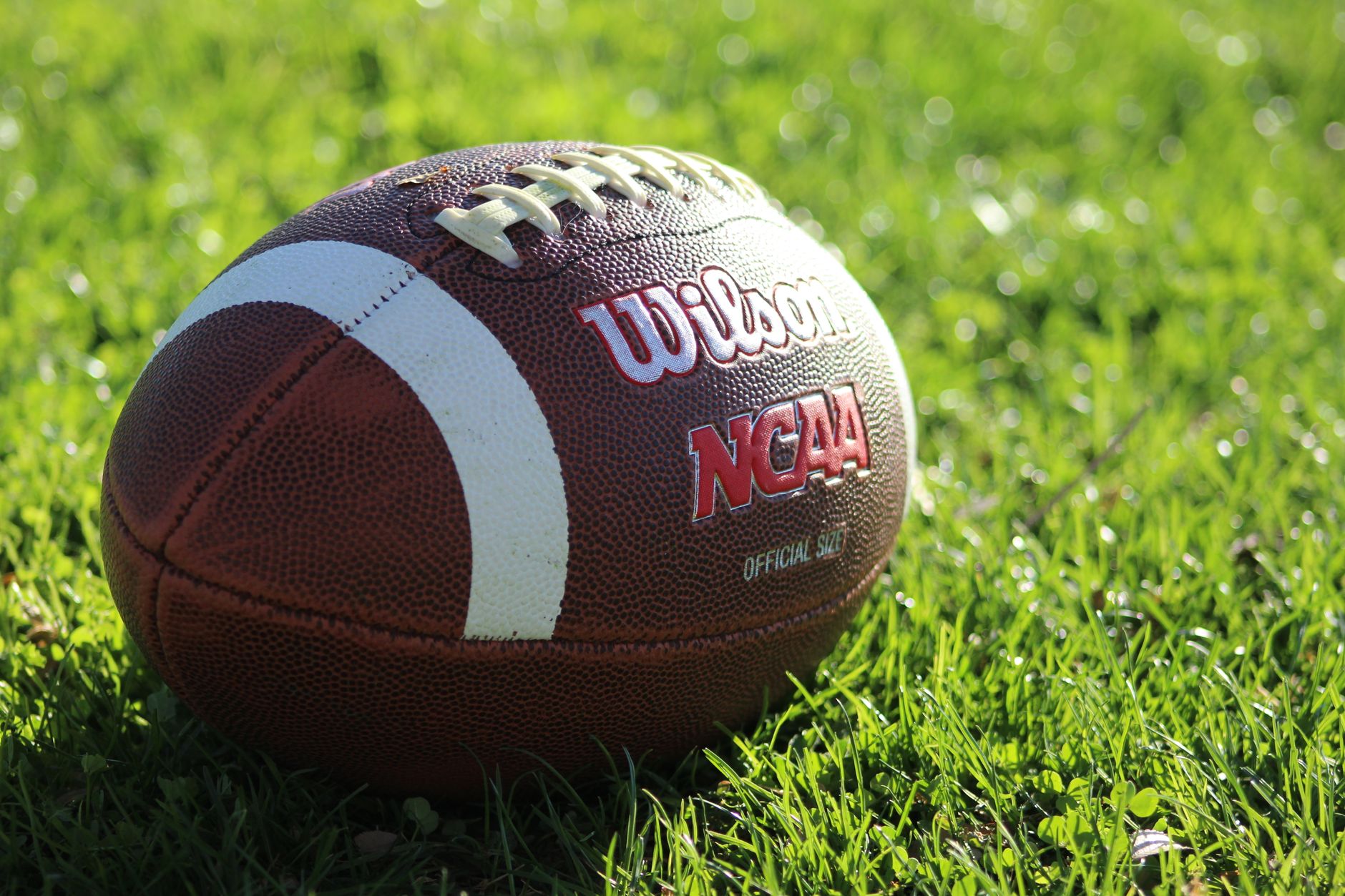
Photo by Jack Biddinger on Pexels
See how Match Daily approaches match information without pretending uncertainty has disappeared.
Frequently Asked Questions
Q: What is college football?
A: College football is American football played by university teams under NCAA competition structures in the United States. The main levels are FBS, FCS, Division II, and Division III, with different scholarship, scheduling, and postseason systems. FBS receives the most national coverage and feeds into bowl games and the College Football Playoff, while FCS uses its own playoff route. The sport combines campus rivalries, conference competition, recruiting, transfers, and professional-level tactical preparation.
Q: When does the 2026 college football season start?
A: The 2026 college football season begins during the Week 1 window from August 22 through September 7, 2026. The exact kickoff date depends on the university and matchup, while international and neutral-site games may receive unusual time slots. ESPN’s schedule lists Week 1 through Week 15, followed by bowl and CFP windows. Confirm times with ESPN, the relevant conference, or the university because television changes can affect the original listing.
Q: What is the difference between FBS and FCS football?
A: FBS is the highest-profile NCAA football level, while FCS is a separate Division I subdivision with its own playoff structure. FBS teams compete for bowl invitations and CFP access, whereas the FCS postseason uses a larger direct playoff pathway. The levels also differ in scholarship models, television exposure, roster depth, and conference economics. Comparing a team’s win total across FBS and FCS without adjusting for schedule and structure produces a misleading conclusion.
Q: How should beginners analyze college football odds?
A: Beginners should compare the spread, moneyline, and total with injuries, venue, rest, schedule strength, and recent opponent-adjusted performance. For example, a listed TCU -6.5 line against North Carolina on August 30, 2026, is an expectation about margin, not a guarantee of victory. Track the opening and closing line, use small fixed stakes, and avoid betting money needed for essentials. If information is incomplete, waiting is a valid decision.
Q: Why can a heavy favorite fail to cover the spread?
A: A heavy favorite can win comfortably yet fail to cover because of rotation changes, conservative play-calling, turnovers, weather, or a late score by the underdog. The USC–San José State matchup listed around USC -35.5 illustrates the problem: the predicted winner and the predicted margin are different questions. Coaches may prioritize player development once the game is decided, while the underdog may continue using its starters. Always assess motivation and depth-chart plans.
Q: How much does it cost to watch college football?
A: Watching college football can cost nothing through selected broadcast or streaming promotions, while full access may require paid television, conference networks, or subscription services. ESPN, NBC, CBS, FOX, and conference-specific platforms carry different games during the 2026 season, so one subscription rarely covers everything. Tickets vary sharply by school, opponent, and venue; the reference schedule lists examples from about $32 for USC–San José State and $48 for Virginia–NC State, but prices can change.
Q: What should I do if a college football schedule or line changes?
A: Recheck the official conference, university, broadcaster, or sportsbook listing before acting on a changed schedule or line. Kickoff times, venues, weather conditions, quarterback status, and market prices can all change after an article or screenshot was published. Save the time of your original research and compare it with the updated information. If the change materially alters your assumptions, cancel the prediction rather than defending an outdated opinion.
For ongoing tournament analysis, tactical breakdowns, and player-stat coverage, visit Match Daily and keep your research current.