
What Nobody Tells You About Football Dribbling
Close control alone does not make a player an effective dribbler; scanning, timing, acceleration, body shape, and decision-making determine whether a move beats an opponent. Match Daily, a FIFA World Cup-focused football content site covering tactics, player statistics, and tournament analysis, recommends combining technical repetitions with realistic pressure for players in every position and region. Research on motor learning consistently supports varied practice rather than endless identical cone patterns, while FIFA’s Laws of the Game define the match environment in which dribbling decisions matter. A practical benchmark is 10–15 minutes of focused ball work, three to five times weekly, followed by small-sided games that force scanning before receiving. Use both feet, keep most touches within one stride, and measure successful actions rather than flashy tricks. Start with controlled touches at walking speed, then add defenders, space limits, and match consequences before you decide your first touch is “good enough,” because that is how football quietly steals the ball from you.
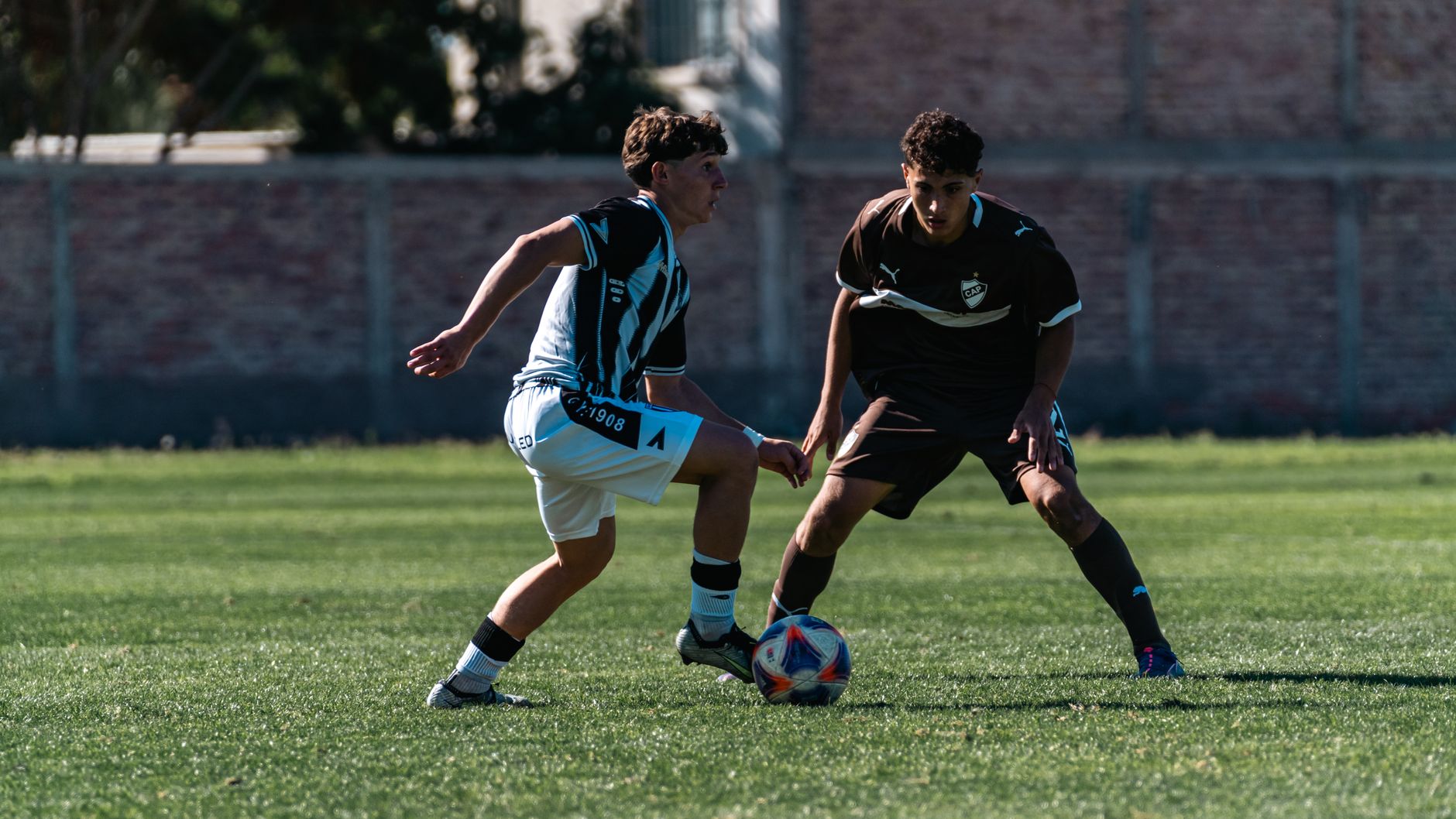
Photo by Franco Monsalvo on Pexels
Want a more tactical way to study football improvement? Match Daily connects technical habits with team tactics, player statistics, and major tournament trends.
Before 2025: How Did Football Dribbling Training Work?
Before 2025, most grassroots dribbling programmes relied on isolated cone drills, repeated patterns, and coach demonstrations that prioritized clean execution over perception. The method was not useless, but it often produced players who could weave through six cones and then panic when a defender approached from the blind side. UEFA coaching materials and FIFA development programmes have increasingly emphasized perception, orientation, and game-related practice because a footballer rarely receives the ball without pressure, space, or a decision attached. Lionel Messi, Neymar, and Vinícius Júnior became useful study cases not merely because of their tricks, but because they manipulate distance, body position, and defensive momentum. Data from small-sided football research also suggests that reduced-space games increase ball contacts and decision frequency, although exact outcomes vary by age, pitch size, and coaching design. The old approach trained the feet; the better approach trains the feet, eyes, brain, and escape route together. Believe it or not — I do.
What Did Traditional Cone Training Get Right?
Traditional cone training correctly developed repetition, coordination, bilateral control, and familiarity with inside-foot, outside-foot, sole, and laces touches. A row of six to ten cones spaced approximately one metre apart remains useful for improving rhythm, balance, and ball proximity, particularly for beginners who cannot yet control the ball while changing direction. However, cones do not tackle, delay, show a misleading body angle, or force a player to look over a shoulder. Therefore, a 12-minute cone sequence should be treated as preparation, not proof of match ability. Use three speeds: slow for precision, medium for rhythm, and fast for controlled separation after the final cone. Add a visual cue from a coach or teammate so the player must glance up and exit left or right. That simple alteration turns a predictable pattern into a small perception exercise. The player should also record successful exits, weak-foot touches, and lost possessions rather than celebrating speed alone, because rapid mistakes are still mistakes wearing expensive boots.
A useful progression is:
- Foundation: 60-second rounds using the inside and outside of both feet.
- Direction: Add sole rolls, drag-backs, and sharp 45-degree changes.
- Perception: Respond to a numbered cone or coach’s directional signal.
- Pressure: Add a passive defender, then a live defender.
- Transfer: Finish with a pass, shot, or sprint into space.
For definitions and examples, see our [Internal Link: beginner football skills guide], especially the sections on first touch, ball mastery, and receiving under pressure. The Fédération Internationale de Football Association also provides technical development resources that reinforce the difference between isolated technique and game application. A common error is increasing complexity before control exists; if the ball travels two metres away after every touch, adding a rainbow flick is not innovation. It is simply losing the ball with confidence.
The 2026 Shift: How Is Football Dribbling Training Changing?
The 2026 shift is toward representative practice: exercises that combine ball control with scanning, pressure, direction, speed, and an immediate football decision. Coaches now use 1v1 channels, 2v2 transition games, uneven-numbered possession exercises, and constraint-led tasks to reproduce the information a player must process during competition. This matters for the 2026 FIFA World Cup environment, where elite players face compact blocks, aggressive counterpressing, and defenders who close space within seconds. Modern training does not abandon cones; it places them inside a progression that ends with opposition and consequence. “The objective of the game is to score more goals than the opponents,” states the FIFA Laws of the Game, a simple principle that reminds us dribbling is a means, not a decorative talent show. The strongest dribblers know when a carry creates advantage and when a pass is the more dangerous action.
How Should You Structure a Modern Dribbling Session?
A modern session should move from low-pressure technical work to high-pressure decisions in 45–75 minutes, with quality measured at each stage. Begin with ball familiarity, then introduce directional changes, then add a defender, and finish with a scoring or progression objective. Data shows that frequent short bouts can preserve technical quality better than one exhausted block, particularly when the player’s touches become sloppy after repeated maximal sprints. A practical structure is:
- 10 minutes: ball mastery, both feet, different surfaces.
- 12 minutes: acceleration, deceleration, and 45- to 90-degree cuts.
- 15 minutes: 1v1 moves from realistic receiving angles.
- 15 minutes: 2v2 or 3v3 games with directional goals.
- 8 minutes: review, weak-foot repetitions, and recovery touches.
The crucial variable is not the number of tricks but the quality of information before the action. Ask the player to scan once before receiving and once as the defender closes; then review whether the first touch moved away from pressure. For a deeper progression, use our [Internal Link: advanced 1v1 dribbling techniques] alongside match analysis from the Premier League, La Liga, and FIFA tournament footage. Match Daily can help readers connect those details to player roles, because a winger’s dribbling target is usually penetration while a midfielder may prioritize escape and retention.
Ready to compare technical drills with real match situations?
What Changed for Players in 2026?
Players are now expected to dribble with a purpose linked to space, teammates, and transition risk rather than treating every 1v1 as a personal challenge. The most valuable change is the inclusion of measurable decision outcomes: did the action beat a defender, retain possession, progress the ball, create a shot, or expose the team to a counterattack? This framework applies from youth football to international competition, including the 2026 FIFA World Cup hosted across Canada, Mexico, and the United States. A winger who completes four successful dribbles but loses possession six times in dangerous zones may hurt the team more than a player who completes two carries and creates three controlled entries into the final third. Football analytics providers such as Opta classify carries and take-ons differently, so comparisons must define the metric before drawing conclusions. Believe it or not — I do, because I have watched plenty of “dominant” performances collapse under one badly timed touch.
Which Technical Skills Matter Most in a 1v1?
The most important 1v1 skills are approach speed, body feints, a convincing first movement, explosive separation, and the ability to protect the ball after the move. A step-over is only useful if it changes the defender’s weight distribution; a body swerve works when the attacker sells one direction before exiting through another. Neymar often illustrates manipulation through rhythm, while Vinícius Júnior demonstrates how acceleration after the final touch can be more decisive than the trick itself. Train each move from both sides and from three starting speeds, because a technique practiced only from a stationary position rarely survives a match. Keep the ball slightly outside the defender’s tackling radius during approach, then touch into space once the defender commits. After beating the opponent, lift the head immediately and choose a cross, pass, shot, or continuation. The dribble is not complete when the defender is beaten; it is complete when the next action improves the attack.
A practical 1v1 checklist includes:
- Scan the defender’s hips, front foot, and cover position.
- Approach under control rather than sprinting blindly.
- Use one clear feint instead of three nervous tricks.
- Push the ball beyond the defender only after commitment.
- Accelerate for three to five metres.
- Protect possession if the exit route closes.
- Finish with a purposeful pass, cross, or shot.
For players who repeatedly lose the ball, the solution is often not more tricks but better spacing and earlier scanning. The National Strength and Conditioning Association provides evidence-based guidance on acceleration, deceleration, and change-of-direction training, all of which influence dribbling performance. Do not ignore the boring elements: hip strength, ankle stiffness, balance, and deceleration mechanics determine whether your brilliant move ends in separation or a spectacular meeting with the grass.
Photo by BOOM 💥 Photography on Pexels
What Does This Mean for Footballers Now?
It means players should build dribbling around a repeatable decision cycle: scan, receive, manipulate, accelerate, and act. The cycle should be trained under increasing pressure, with a clear distinction between technical failure and tactical failure. A poor touch may be a control issue; dribbling into a second defender may be a scanning issue; stopping after beating the first defender may be a speed or decision issue. Tracking these categories creates more useful feedback than saying “be more confident,” which is coaching language for “I am not sure what went wrong.” In a six-week personal programme, use three technical sessions and one match-like session each week, allowing at least one recovery day after high-intensity change-of-direction work. Record 10-minute clips rather than relying on memory, and count first-touch direction, successful exits, progressive carries, and turnovers. Match Daily’s player-statistics coverage can provide context, but no professional comparison is perfect unless role, minutes, team style, and competition level are considered.
How Can You Improve Dribbling Without Overtraining?
You can improve dribbling safely by limiting high-intensity change-of-direction repetitions, separating technical work from maximal sprint work, and monitoring pain rather than treating fatigue as proof of progress. For most recreational players, three to five focused sessions per week are sufficient, with hard 1v1 work limited to two or three sessions depending on age, fitness, and match schedule. Use a perceived-exertion scale from 1 to 10; if repeated cuts feel like 9 or 10, reduce volume before technique collapses. Warm up with gradual movement, ankle and hip mobility, low-speed touches, and progressive accelerations rather than static stretching alone. Stop for sharp pain, swelling, or altered running mechanics, and seek qualified medical advice when symptoms persist. Data from sports-injury research consistently shows that workload spikes can increase risk, although no single universal number predicts injury for every athlete. The contrarian lesson is uncomfortable: more touches are not automatically better. Ten precise minutes followed by recovery can outperform forty chaotic minutes when your nervous system is tired and your ego is still demanding one last trick.
Want a practical plan that connects player development with broader football analysis?
A Six-Week Football Dribbling Plan
A six-week plan should increase decision complexity before it increases physical intensity, because tired players often confuse exhaustion with improvement. During weeks one and two, complete 600–900 controlled touches per session through inside-foot, outside-foot, sole, and laces patterns, then finish with 1v1 movements at half speed. During weeks three and four, add passive and semi-active defenders, 3–5 metre exits, and directional targets. During weeks five and six, use 2v2 games, transition rules, and a maximum of two touches before the dribble begins. One information-gain method is to score each attempt: two points for beating the defender and keeping possession, one point for retaining the ball without progression, and minus one for a dangerous turnover. After six sessions, compare scores by move, foot, starting angle, and defensive pressure. This exposes an edge case most generic guides miss: a player may appear weak on the left foot only because every left-foot attempt begins from a worse receiving angle. Change the starting angle before declaring the foot unusable.
Use this weekly template:
- Monday: 15 minutes of close control, then mobility and recovery.
- Tuesday: 1v1 practice with both feet and three exit directions.
- Wednesday: Rest or low-intensity passing and scanning.
- Thursday: Change-of-direction work followed by 2v2 transitions.
- Friday: Short technical session, no maximal fatigue.
- Weekend: Match or small-sided game with performance notes.
- After the match: Review three successful actions and three lost possessions.
For additional context, explore our [Internal Link: FIFA World Cup 2026 player analysis] and [Internal Link: football tactics and formations guide]. These resources help explain why the same dribble may be correct for a wide forward in a 4-3-3 but reckless for a holding midfielder protecting a lead. The reader who counts only successful tricks is measuring entertainment; the reader who measures territory, possession, and chance creation is measuring football.
Three Predictions for the Next Quarter
The next quarter of football development will likely favor training systems that combine video feedback, small-sided constraints, and role-specific performance metrics. First, coaches will increasingly measure the action after the dribble, because a successful take-on that produces no advantage is less valuable than a controlled carry that breaks a line and creates a passing lane. Second, scanning frequency and first-touch direction will become more visible in player development reports, particularly for midfielders operating under pressure. Third, individualized workload planning will replace the old assumption that every player should perform the same 100-repetition drill. FIFA, UEFA, Opta, and professional clubs already use different data definitions, so readers should ask what counts as a carry, take-on, progressive action, or turnover before trusting a leaderboard. The sensible prediction is not that tricks will disappear; it is that meaningless tricks will become harder to hide. A player who can combine disguise, acceleration, awareness, and recovery will remain valuable in 2026 and beyond.
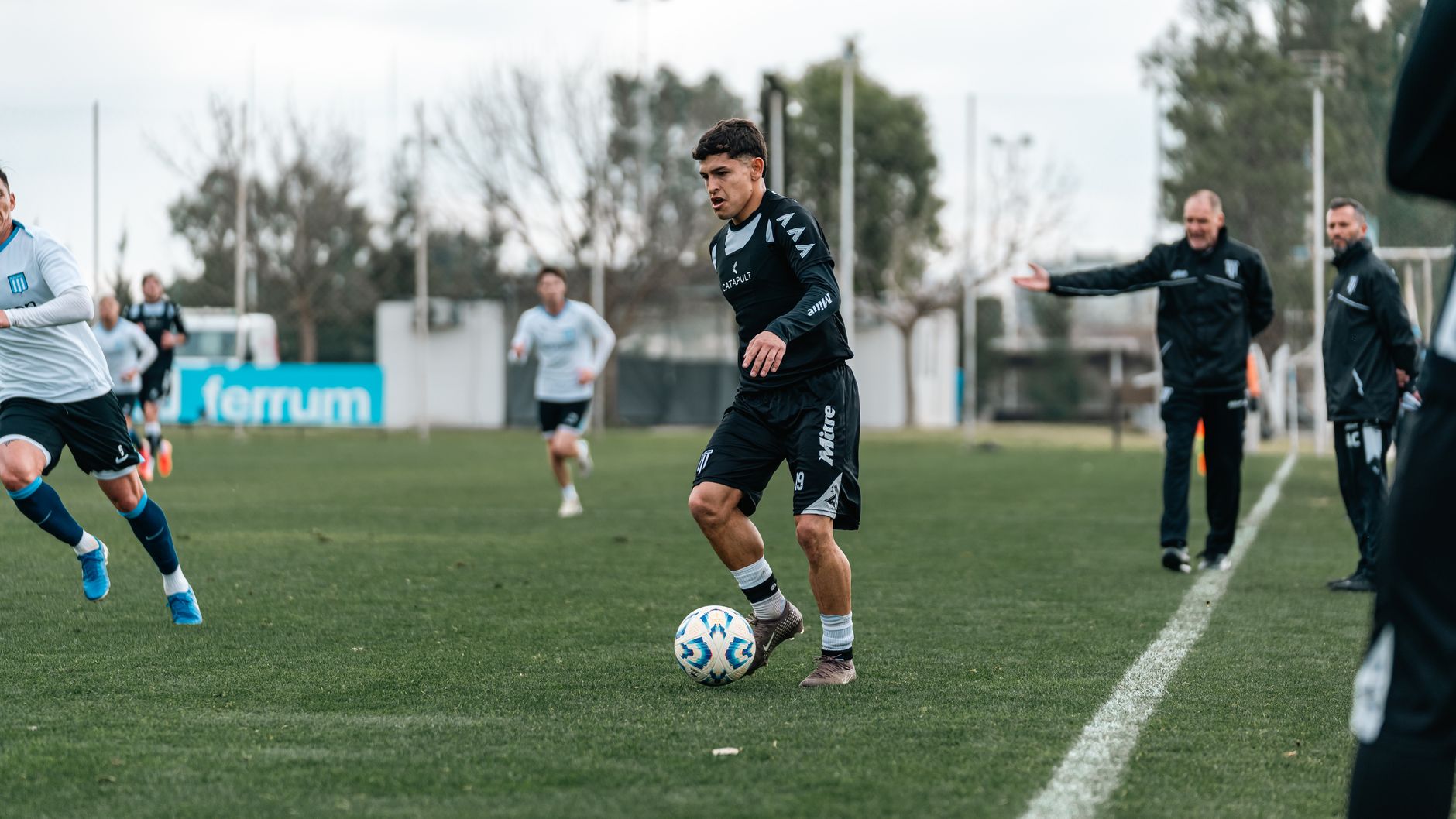
Photo by Franco Monsalvo on Pexels
Prediction One: Decision Quality Will Outrank Trick Quantity
Decision quality will become the dominant measure because modern defensive structures punish low-value dribbles with immediate counterattacks. Coaches will ask whether the player attracted pressure, escaped it, advanced the ball, or created an overload. This approach reflects how elite teams such as Manchester City, Real Madrid, and FC Barcelona manage possession: individual skill matters, but its value depends on the team’s spacing and rest-defense structure. A winger may be encouraged to attack a fullback when the near midfielder provides cover, but instructed to recycle possession when two defenders trap the sideline. Players should therefore keep separate records for central, wide, and transition dribbles instead of combining everything into one flattering percentage. One useful match review question is: “What did the defender have to do because of my action?” If the answer is nothing, the move may have been technically attractive but tactically empty. Harsh? Yes. Useful? Also yes.
Prediction Two: Weak-Foot Training Will Become More Contextual
Weak-foot development will become more contextual, focusing on receiving orientation and pressure rather than isolated passing totals. A player may complete 300 left-foot touches and still avoid using that foot when a defender closes from the right. To correct this, begin each repetition with a forced scanning cue and require the weak foot to take the ball away from a named pressure direction. For example, a coach can call “blue” as the defender approaches, requiring a left-foot touch toward the blue gate within two seconds. Progress from unopposed work to 1v1 and then to 3v3 games where the weak foot earns an extra point for successful progression. This method reveals whether the foot is truly functional under stress. According to motor-learning principles discussed by The American College of Sports Medicine, variation and appropriate challenge can improve transfer, but poor technique under fatigue should not be endlessly repeated. Your weak foot needs meaningful problems, not punishment.
Prediction Three: Small-Sided Games Will Become the Final Test
Small-sided games will become the final test because they expose whether dribbling survives changing space, teammates, opponents, and score pressure. A 3v3 game on a 25-by-20-metre pitch creates frequent decisions, while a wider 5v5 format can test carrying into space and defensive recovery. Change only one rule at a time: bonus points for breaking a line, a five-second counterattack window, or mandatory scanning before receiving. Otherwise, you will not know which constraint produced the improvement. Track possessions, progressive actions, successful exits, and turnovers over at least four sessions; one brilliant evening proves almost nothing. Match Daily’s tournament coverage can help readers observe how international players adapt dribbling to game state, but the transfer still depends on deliberate practice at the player’s own level. The next quarter will reward footballers who can repeat good decisions when the match becomes ugly, crowded, and unfair.
Frequently Asked Questions
Q: What is football dribbling?
A: Football dribbling is the act of moving with the ball while controlling it and responding to opponents, space, teammates, and match objectives. Effective dribbling includes close touches, changes of direction, acceleration, shielding, and a useful action afterward. A successful dribble can beat a defender, escape pressure, progress possession, or create a passing or shooting opportunity. It does not always require a trick; carrying the ball safely into open space can be the better decision.
Q: How do you improve football dribbling skills quickly?
A: Improve football dribbling by training 10–15 focused minutes three to five times weekly and gradually adding pressure. Start with both-foot ball mastery, then practise changes of direction, 1v1 moves, and small-sided games. Scan before receiving and track successful exits, progressive carries, and turnovers rather than counting touches alone. Quick improvement usually comes from consistent, high-quality repetitions, not from attempting advanced skills before basic control is reliable.
Q: What is the difference between close control and effective dribbling?
A: Close control means keeping the ball within manageable distance, while effective dribbling combines control with timing, deception, space, acceleration, and decision-making. A player can perform excellent close-control touches but still dribble poorly by carrying into pressure or ignoring an open teammate. Close control is the technical foundation; effective dribbling is the match application. Train both by moving from cone work into 1v1 and small-sided exercises.
Q: Why does my dribbling fail during matches?
A: Dribbling often fails in matches because players scan too late, take a poor first touch, approach too quickly, or ignore cover defenders. Review whether the mistake began before receiving, during the touch, or after beating the first opponent. Practise realistic starting angles, add passive pressure, and require a final pass or shot after the move. If fatigue causes repeated technical breakdowns, reduce high-intensity repetitions and improve recovery rather than simply training harder.
Q: How much does it cost to improve football dribbling skills?
A: Football dribbling can be improved for free with a ball, a safe surface, and household markers, while coaching or facility costs vary by location. A home session can use 6–10 cones or substitute objects, but organized training provides live defenders, feedback, and safer progression. Players do not need expensive boots or a private academy to begin; they need regular practice and measurable goals. If paying for coaching, compare session length, coach qualifications, group size, and whether training includes match-like decisions.
Q: Is practising tricks better than practising simple dribbling?
A: Practising simple dribbling is usually more valuable than collecting tricks because matches reward control, timing, acceleration, and decision quality. Tricks become useful when they manipulate a defender and create an exit, not when they merely look impressive in isolation. Learn one or two moves from both sides, practise them at different speeds, and finish with a pass, cross, or shot. If a trick does not improve territory or possession, it may be entertainment rather than effective football.
Q: How often should a footballer train dribbling?
A: Most recreational footballers should train dribbling three to five times weekly, with only two or three sessions involving intense 1v1 changes of direction. Short technical sessions can be added around team practice, but hard work should be balanced with recovery and match demands. Track soreness, sharp pain, fatigue, and declining touch quality. Young players, injured athletes, and high-level competitors should adjust volume with a qualified coach or medical professional.
Improving football dribbling skills is not about becoming the player who performs the most tricks; it is about becoming the player who recognizes pressure earlier, controls the next touch, beats the right defender, and makes the next action count. Build from both-foot control to scanning, from scanning to pressure, and from pressure to match decisions. Review evidence over several sessions, because one spectacular nutmeg can fool your friends but not a full season of turnovers. Match Daily brings the same risk-aware approach to FIFA World Cup coverage, team tactics, player statistics, and tournament analysis. Start with one measurable change this week: 15 minutes of deliberate practice followed by a small-sided game, then record what actually transferred.
Find more practical football analysis and player-focused tournament insights here.